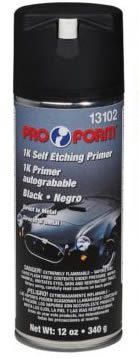
Self-etching primer is a type of primer that is used to prepare metal surfaces for painting. It is specifically designed to create a strong bond between the metal surface and the paint by etching the surface of the metal to create a rough texture.
Self-etching primer contains acidic compounds, like phosphoric acid, that chemically “etch” the surface, creating a better adhesion between the metal and subsequent layers. It works by reacting chemically with the metal surface, creating a micro-etch pattern on the surface of the metal. This micro-etch pattern provides a mechanical key for the paint to adhere to, creating a strong bond between the metal and the paint.
Self-etching primer is ideal for unpainted, bare metal surfaces where extra adhesion is needed. It is typically used on new, bare metal surfaces, such as those found on cars, trucks, and other vehicles, but can also used on metal surfaces that have been previously painted, but where the paint has since been removed. It is generally applied in one thin layer. Self-etching primer should not be sanded, as sanding can remove the etched bond to the metal, reducing its effectiveness.
One of the advantages of self-etching primer is that it can be used on a wide variety of metal surfaces, including aluminum, steel, and galvanized metal. Additionally, it is easy to apply and dries quickly, making it a popular choice for automotive and industrial applications.
It’s important to note that self-etching primer is only to be used on metal surfaces, and not on other types of materials like plastic, wood or glass. It is also important to follow the manufacturer’s instructions for the application and use of self-etching primer, including safety precautions such as wearing gloves and a mask.
Self-etching primer differs from standard automotive primer, which acts as a general-purpose undercoat that provides a base for paint to adhere to, filling minor imperfections and providing a smooth surface for paint. General automotive primer can be made from a variety of components, including epoxy, urethane, or acrylic, depending on the specific type of primer, and is commonly used on previously painted surfaces, repaired panels, and sometimes bare metal. It helps with rust resistance and overall durability but may require a separate rust-preventive layer. Automotive primer is often sprayed on in multiple coats, followed by sanding between coats for a smooth finish.
Here are some highlights of the differences between Self-Etching Primer and general Automotive Primer:
1. Self-Etching Primer
– Purpose: Self-etching primer is specifically designed to bond with bare metal. It contains acidic compounds that chemically “etch” the surface, creating a better adhesion between the metal and subsequent layers.
– Formulation: Usually formulated with an acid, like phosphoric acid, and a resin that helps the primer bond to bare metal.
– Use Case: Ideal for unpainted, bare metal surfaces where extra adhesion is needed. It’s often used on new metal parts or areas where rust has been completely removed.
– Application: Generally applied in one thin layer. Self-etching primer should not be sanded, as sanding can remove the etched bond to the metal, reducing its effectiveness.
2. Automotive Primer
– Purpose: Automotive primers are general-purpose undercoats that provide a base for paint to adhere to, filling minor imperfections and providing a smooth surface for paint.
– Formulation: Made from a variety of components, including epoxy, urethane, or acrylic, depending on the specific type of primer.
– Use Case: Commonly used on previously painted surfaces, repaired panels, and sometimes bare metal. It helps with rust resistance and overall durability but may require a separate rust-preventive layer.
– Application: Automotive primers are often sprayed on in multiple coats, followed by sanding between coats for a smooth finish.
If you’re working with bare metal surfaces, self-etching primer is usually the better choice due to its strong bonding properties. For general use, including previously painted or repaired surfaces, a standard automotive primer is more versatile and offers a smoother, sandable finish for topcoat applications.
Pickup trucks allow you to carry different goods, from appliances to farm produce, and the pickup truck bed is one of the main reasons why people choose trucks over cars. While there used to be only long beds and short beds, now, there are many truck bed sizes to choose from.
Cross-reference Chart for Pickup Truck Bed Size Dimensions
Manufacturers typically change truck bed sizes when they introduce a new model year. This used to be straightforward when there were only two options – short bed and long bed. This simple division has slowly changed over the years with the addition of newer cab styles, such as the extended cab and crew cab, and now manufacturers typically offer several bed lengths.
Having a wider selection can be nice, but it can also cause problems when purchasing repair panels for your truck’s bed. Having the right bed size dimensions ensures you get the right panel for your pickup truck. If you’re unsure of your exact pickup truck bed dimensions, use the following truck bed size chart to help you determine the right size. We’ve included as many truck bed sizes and dimensions as we’ve been able to find, but if you can help fill in any of the gaps, please email us at service@raybuck.com.
Choosing the right seat cover(s) for your truck is important for enhancing comfort, safeguarding the seats and improving the aesthetics of your interior. The covers protect your seats from wear and tear. Investing in truck seat covers and reupholstering can also help your seats remain new, which can help maintain the vehicle’s resale value.
Why Invest in Quality Truck Seat Covers?
Daily driving can take a toll on the interiors of your truck, leading to stained, sagging or ripped upholstery. Traditional seat covers and reupholstering extend the life of your seats, ensuring comfort and safety for longer. Traditional aftermarket seat covers preserve the quality and value of your truck’s seats and ensure fast and easy installation. However, reupholstery kits are custom-made to replace your current seat upholstery, enhancing the look and feel of your vehicle’s interior.
You can tell it’s time to reupholster your truck seats or add a new set of covers if you have:
Interior odor issues
Loose upholstery
You and your passengers are consistently uncomfortable
Irreparable damage on the seats
General wear and tear issues
Here are some additional benefits of truck seat covers and reupholstery kits:
Protection: Seat covers and reupholstery protect against wear and tear, spills, UV damage, fading and extreme temperatures that can cause cracks.
Comfort: Reupholstery kits come with custom-designed seat pads and low-pile backing material that enhances comfort during long drives.
Aesthetic appeal: Choose covers that complement, refresh, personalize and enhance your truck’s interior.
Increase resale value: Replacing worn-out seat covers with fresh ones will dramatically improve the look and feel of the truck’s interior and increase its resale value.
Simple installation: Most truck seat covers and reupholstery kits are relatively easy to install and maintain with minimal tools and assistance.
Types of Truck Seat Covers
Seat covers come in two main fit types — custom and universal. Whether you should buy custom or universal seat covers depends on several factors. Let’s explore each option for better insights into which one suits your needs.
Universal Seat Covers
These covers are “one size fits all” and offer a basic level of protection. They are designed to fit multiple car models, regardless of their unique characteristics. Universal seat covers are generally made from flexible materials and can stretch and adjust to different types of car seats.
They have a less-than-perfect fit and don’t hug your seats as closely as custom covers would. In addition, many people find that their generic design reduces their aesthetic appeal. The main advantage of universal seat covers is that they are more affordable.
Reupholstery Seat Cover Kits
Reupholstery kits are an example of custom seat covers that perfectly fit the seat frames of specific makes and models of trucks and sport utility vehicles. You get to choose from various materials and color options to personalize and elevate your vehicle interior. They can be found in open- and closed-back styles that replace the entire upholstery of your current seats, including the burlap, padding, seat cover and backing material.
You can replace your seat padding with either 1- or 2-inch foam sheets and burlap substrate, which adds protection and comfort to your truck cabin. A comprehensive custom reupholstery kit includes installation tools, materials and instructions to help you remove the old truck seats and ensure the safe and secure installation of the new upholstery.
They provide supreme comfort, unmatched fit and enhanced durability. In addition, custom-fit seat covers provide superior protection compared to universal seat covers since they are made specifically for your seats.
Material Types for Upholstery
Choosing the right materials is about more than style or aesthetics — you also want something comfortable, durable and easy to maintain. Here are the common truck seat cover materials you’ll see:
Leather
Leather adds a touch of luxury to your truck’s interiors by being stylish, durable, comfortable and easy to clean. It provides excellent protection against stains and spills. However, leather seats can become uncomfortable in extreme weather because they get too cold in the winter and too hot in the summer. They’re also generally more expensive than most other materials and need extra maintenance to prevent drying and cracking.
Polyester
Polyester is a synthetic fabric known for its affordability and resistance to water and UV. It also blends well with other materials, making it a good choice for bonded fabrics. Despite its affordable price, polyester is not as durable as fabrics made from natural materials, like leather and offers lower levels of comfort.
Vinyl
Vinyl is one of the most preferred options because it’s easy to clean and maintain. It’s available in various colors and textures and can mimic the look of leather. It offers superior sun protection and is more affordable than leather but similarly absorbs heat and can be uncomfortable during summer.
Velour
Velour is a popular seat cover fabric because it mimics the original upholstery of many modern automobile models. It’s affordable and versatile, which makes it a good option for many vehicle models, but it’s also the most durable option on the market. Velour seat covers add comfort to your truck cabin as they are pliable and have a soft texture.
Tweed
Tweed is a versatile material ideal for designing custom seat covers that fit every curve and contour on your seats. It provides a classic aesthetic that adds a touch of elegance and sophistication to your truck’s interior. Tweed is a breathable fabric that keeps the seats cool and comfortable in all seasons. In addition to being resistant to wear and tear, tweed seat covers are easy to wash and maintain.
Custom Seat Covers for Different Truck Makes and Models
Custom reupholstery kits are made to fit seat frames for specific truck makes and models, like:
Chevy/GMC trucks: The ready-to-install reupholstery kits for Chevy/GMC trucks are made of auto-rated, high-quality materials that make your seats look and feel brand new. They come with a fully foamed back, hog rings, pliers and installation instructions to ensure you secure the kit to the seat frame. We have open- and closed-back options for Classic Chevy Trucks (1941-1990s) and Chevy Silverado (1996-2006) pickup trucks.
Ford trucks: Transform the interior of your Ford truck with vinyl, tweed or velour reupholstery kits that give your vehicle a new look and enhance comfort for just a few hundred dollars. Our kits are custom-made in the United States for vintage Ford pickup bench and bucket seats for models ranging from 1953-1956, 1957-1966, 1973-1979, 1980-1986 and 1980-1992.
Dodge trucks: Restore your Dodge pickup truck’s interior with easy-to-install open-back reupholstery kits or closed backrests for crew cab and front seats. The seat covers have double-needle pleats sewn onto foam backing and have a channel to insert the wire and the hog ring during installation. This ready-to-install kit is available for the original frames of 1972-1986, 1962-1969 and 1987-1996 pickup trucks.
How to Choose Truck Seat Covers
Other than the advantages and disadvantages of different types of seat covers, such as traditional seat covers over reupholstery kits, you should also consider the following factors when choosing the covers for your truck:
Assess your needs and choose covers that meet those needs and provide comfort and functionality.
Consider your budget and ensure you’re getting value for your money.
Choose a seat cover that fits perfectly and doesn’t interfere with your vehicle’s seat-mounted airbags and other safety features.
Pick a material that offers maximum comfort and protection from stains and UV damage.
Read customer reviews and ratings to learn about the experiences of other drivers who have used the covers you’re considering.
Why Shop Raybuck for Truck Seat Covers?
Here are some of the reasons you should shop with us:
Wide selection: We have an extensive range of seat covers custom-made to fit bench, split bench and bucket seats of various vehicle makes and models.
Quality assurance: We sell high-quality and durable reupholstery kits made from materials that ensure modern comfort, endurance and high performance.
Customer service: We offer excellent customer service and expert assistance to ensure you get practical answers to your questions and the most suitable solutions for your needs.
Buy Truck Seat Reupholstery Kits From Raybuck Auto Body Parts
Investing in quality seat reupholstery kits has multiple advantages over traditional seat covers. They can make your ride more comfortable while protecting your vehicle’s resale value. The best part is that they’re custom-made for your original seat frame to ensure a perfect fit. Ready to protect your truck seats? Shop our extensive collection of reupholstery kits and seat covers today!
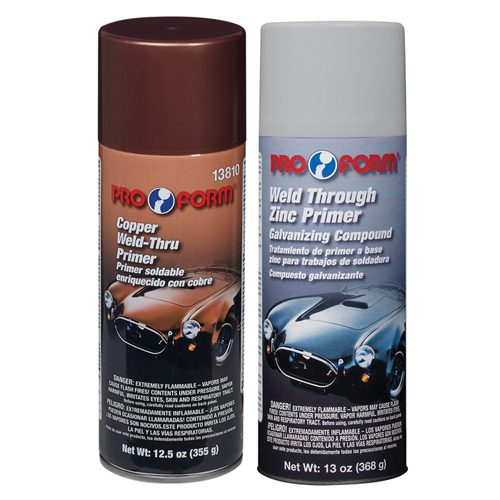
Weld-thru primer is a type of primer that is used to prepare metal surfaces for welding. It is designed to protect the metal from oxidation and corrosion during the welding process, and also to improve the flow of the weld.
Copper and zinc are both commonly used as active ingredients in weld-thru primers. The main difference between the two is the way they protect the metal from corrosion.
Copper weld-thru primer is typically made with a high concentration of copper, which is known for its excellent corrosion-resistant properties. Copper is a cathodic metal, meaning it will corrode before the steel it is protecting. This means that if a small area of the steel is exposed to the environment, the copper will corrode in that area instead of the steel. The copper also creates a small electrical current that helps to prevent corrosion. Copper weld-thru primers are typically used when the metal that is being welded is going to be exposed to harsh environments such as marine or industrial.
Zinc weld-thru primer, on the other hand, is typically made with a high concentration of zinc. Zinc is also an active metal that corrodes before the steel it is protecting. Zinc also creates a small electrical current that helps to prevent corrosion. Zinc weld-thru primers are typically used in automotive applications, as they provide a good temporary corrosion protection until the final paint is applied.
Both copper and zinc weld-thru primers provide a protective layer between the metal and the atmosphere to prevent oxidation and corrosion. They also improve the flow of the weld which helps to fill in small gaps and improve the overall quality of the weld. However, copper weld-thru primer is generally considered more corrosion-resistant than zinc weld-thru primer and is used in harsher environments, while zinc weld-thru primer is commonly used in automotive applications. It is important to select the appropriate primer based on the specific application and environment in which the metal will be used.
The primer should be applied in a thin and uniform layer, making sure to cover all the areas that will be welded. Once applied, the primer should be allowed to dry completely before welding.
It’s important to note that the fumes produced when using Weld-thru primer are toxic, and therefore it is important to use adequate ventilation and personal protective equipment. The primer should also be used in a well-ventilated area, away from open flames and other sources of ignition.
The Chevy Silverado is an American icon. Modeled after the GMC Sierra, this light-duty truck is ideal for work and leisure. But as it ages, it is prone to developing some issues.
This post will explain some common problems with the Chevy Silverado and how to solve them.
Typical Issues With 2019-2023 Chevy Silverado
GM completely overhauled the Silverado for the 2019 release. With a new platform, powertrain range and overall design, the latest generation offers more configuration options than ever.
Though these trucks are still fairly new, owners have reported experiencing several problems with them.
1. Fire Risks
2019 and 2020 Silverados could experience engine fires, especially those with carpeted floors.
In 2019, GM issued recalls for more than 640,000 Silverado and GMC Sierra trucks. The company also released a stop-sales order until they could fix the problem.
Two potential fire causes include the following.
Leaking oil cooler lines: One of the truck’s oil cooler lines may leak into the engine and ignite, causing a fire. Replacing it can prevent an emergency.
Pretensioner gas: If the vehicle suffers a crash where the pretensioners activate, the hot pretensioner gas could vent through the bracket and ignite the carpeted floor.
The newest Silverados have advanced Android-powered infotainment systems that connect to drivers’ mobile devices. While these systems are convenient for drivers who like to stay in touch, they’re also the source of many complaints.
Here are some issues customers have experienced with their in-car electronic systems.
Faulty radios: The radio systems in 2018-2020 Silverados might unexpectedly jump to the maximum volume, creating a safety hazard. Many drivers have also experienced issues where the radio cut out frequently.
Bluetooth calls: Another widespread report is a continuous ringer sound playing throughout a phone call. Drivers having this problem resolved it temporarily by shutting the car off, opening and closing the door and switching the ignition back on.
Reverse camera: Some drivers noted that the reverse camera image would remain active for up to a minute after shifting into drive.
Bad touchscreen: Many customers have reported a glitching or otherwise unresponsive touchscreen.
You can try to reset the truck’s computer by disconnecting the battery and allowing it to rest for about a minute before reconnecting it. Once it’s back on, press and hold the radio’s power button for approximately five seconds. If you are still experiencing issues, bring your truck in for diagnostics.
3. Engine Control Module Problems
Some 2018 Silverados have experienced unexpected engine stalling and failures while driving due to defective ECM software.
Running a software update has solved this issue for most owners. GM issued a service update bulletin on the truck and now offers complimentary updates to affected owners.
A service update bulletin is different from a recall. Instead, the manufacturer sends information to dealerships and other service centers about specific problems with a vehicle. Typically, affected vehicle owners can receive free repairs to resolve the issue.
4. Transmission Issues
Transmission and driveshaft problems are also common in this generation of Silverados. Many drivers noticed the following issues at low mileage:
The truck would lunge or jerk forward while shifting.
The truck would shake or shudder while accelerating.
The transmission would fail.
Despite taking their trucks in for repairs, some drivers said their issue had not improved. In some cases, it would even get worse.
The 2018 model is especially prone to problems due to its eight-speed transmission. In this model, the automatic transmission may unexpectedly downshift to first gear regardless of the current driving speed, potentially causing the engine to lose power.
Additionally, customers with six-speed and eight-speed transmissions experienced overheating, which meant the car would unexpectedly stop driving.
Your best option is to take the truck to your dealership or mechanic to diagnose the problem.
Known Problems With 2014-2018 Chevy Silverado
The third generation of Silverado shared many of the same issues as the previous generations, including 4WD sensor failure and HVAC problems.
Its redesign also brought some new issues — many drivers consider the 2018 Silverado to be an especially problematic model for this reason. Customer reviews for this model are significantly more negative than other models, even within the same generation.
1. Seat Haptic Motor Failure
You may have a seat haptic motor failure if you see a driver service assist message on your dashboard.
The two haptic motors, located on either side of the driver’s seat cushion, connect to sensors in the bumper. These sensors alert the driver when they get too close to other vehicles or objects.
In most cases, the door-side sensor failed due to its position on the seat.
You can often fix this problem yourself by replacing the motor. However, if the error message continues to appear, it may be worth bringing your truck to a professional.
2. Clunking Steering Column
You may hear or feel a clunking noise in the steering column while turning, possibly due to a loose bolt on the frame or ball joint.
This problem can affect Silverados of all generations, typically around the 88,000-mile mark. Many owners have found the clunking worsened over time, even with repairs.
Replacing the steering shaft can permanently solve the problem.
3. The “Chevy Shake”
Silverados from model years 2014 to 2019 are especially prone to experiencing intense, mysterious vibrations and wind buffeting, also known as body pressure booming. These vibrations often begin at about 35 mph and escalate at higher speeds, causing discomfort for drivers and passengers.
Because this problem affects other full-sized GM vehicles that use the K2XX platform, including the GMC Yukon, Chevy Suburban and Cadillac Escalade, owners have nicknamed it the “Chevy Shake.”
The Chevy Shake may result from issues with one of two parts.
Eight-speed transmission: A defective hydraulic mechanism within the transmission system may put excess strain on the gears, leading to transmission failure.
Aluminum driveshaft: If the aluminum driveshaft wears down, it can cause powerful shaking when traveling at higher speeds.
Regardless, owners have had little success resolving the issue despite bringing their vehicles in for multiple fixes.
4. Fuel Pump System Failure
In 2018, Texas motorists brought a lawsuit against GM to seek damages for defective CP4 high-pressure fuel injection pumps.
They complained that the CP4 fuel pump was incompatible with diesel fuel. The pump, originally designed for European use, came standard on all 6.6L Duramax diesel trucks. European diesel has a higher lubricity than American diesel, so the pump must exert higher pressure to deliver good fuel efficiency.
However, with the thinner American diesel, such high pressure is unnecessary. Instead of improving fuel efficiency, the high pressure causes the internal metal parts to rub against each other and generate friction. Metal shards then fall off and contaminate the system, leading to sudden failure.
Often, the injection system fails while the truck is in motion, which can be incredibly dangerous.
Common Issues With 2007-2013 Chevy Silverado
Some people call the second-generation Silverado the GMT900 because it runs on the GMT900 platform. Buyers could choose from either V6 or V8 Vortec engines and two interior designs.
The redesign solved some of the first generation’s issues, but also created new problems. For example, most of the common issues of this generation and the one after it stem from sensor failures.
1. Fuel Level Sensor Failure
At around the 100,000-mile mark, drivers noticed their fuel level sensors would begin malfunctioning, affecting the dashboard reading.
In most cases, the fuel gauge would decrease faster than necessary, making it seem like drivers went through more gas. However, there have been some reports of the fuel gauge doing the opposite.
Though this problem rarely affected driver safety or truck performance, it could leave drivers stranded if they unexpectedly ran out of gas mid-drive. Replacing the sensor is the best way to resolve this issue for good.
2. Excessive Oil Consumption
Excess oil consumption is a common problem for GM trucks produced between 2007 and 2013 due to leaking piston rings on the 5.3L Vortec 5300 engine. Oil would escape through these rings and flow into the combustion chamber, where it would either burn up or form a carbon deposit.
The questionable active fuel management system didn’t help much, either. It’s likely the AFM system only made the problem worse.
Additionally, the oil monitoring system does not alert drivers to the problem until it’s too late to prevent engine damage. Some drivers claimed their trucks burned through as much as a quart of oil in only 1,000 miles.
If left unchecked for too long, the issue could affect other systems in the truck, like the catalytic converter. Bring your Silverado to a professional for the best results.
3. Taillight Switch Failure
Another problem with this generation of Silverados is that the brake lights may remain on even after turning off the truck. Typically, this issue arises when the brake light switches fail due to faulty connectors or broken wires.
As the name implies, the brake light switch should activate the taillights when you stop your truck. Because it connects to the truck’s internal computer, it can affect other systems.
Other common symptoms of this issue include:
Broken cruise control
ABS light malfunctions
Truck does not turn on
Replacing the brake light switch is the only lasting solution to this problem. It’s possible to do this repair yourself if you prefer. However, it’s best to bring your car in to the shop unless you have specialized equipment like car jacks on hand.
Common Issues With 1999-2006 Chevy Silverado
The original Silverado 1500 was a larger, more robust version of the Chevy C/K. Built on the GMT800 platform and containing a 270-hp 5.3L Vortec V8 engine, this new series of pickup trucks could handle harder work than its lightweight predecessor.
Like every new vehicle, it had some flaws. Here are some of the most common issues drivers experience with this generation.
1. 4WD Position Switch Failure
Almost every generation of Chevy Silverado has suffered various issues with the 4WD switch.
Drivers of early models reported that their truck would automatically switch between 4WD and 2WD and the Service 4WD light would appear on the dashboard. They also couldn’t manually change modes while the problem was happening.
Typically, this problem was due to a worn position sensor, which would become defective and interfere with the drivetrain. Drivers usually experienced position switch issues around the 100,000-mile mark, but trucks that had seen heavy-duty use often started acting up earlier.
Though a faulty position switch isn’t necessarily dangerous, it detracts from fuel efficiency.
2. Front Wheel Bearing Failure
One of the most common issues with early Silverados is premature failure of the front wheel bearings. This generation was susceptible to rust issues developing in and around the hubs, which would often spread to the wheel bearings.
A rusted wheel bearing would become loose and push the ABS sensor out of position, which would often cause the ABS to activate even when driving at slow speeds.
Other signs of a faulty front wheel bearing include:
A growling or humming noise while driving
Uneven tire wear
Soft-feeling brake pedals
Illuminated ABS warning light
This issue is easy to diagnose. Hold the wheel at the 12 and 6 o’clock positions and attempt to move it in and out. If it moves, the wheel bearing is loose. You will need to replace it for best results.
3. Knock Sensor Failure
The knock sensors detect combustion issues that could cause catastrophic damage to your engine. When they fail, you could end up with a failing engine as well.
This problem is typical in LS-powered GM trucks, including the original Silverados. Over time, the rubber plugs sealing the sensors dry out and harden, which also causes them to shrink. Then, moisture enters the area containing the sensor, which can interfere with its ability to detect problems.
Additionally, after long-term exposure to engine heat, the harness that connects the knock sensor to the engine can become dry and brittle. This issue can also lead to sensor failure.
Symptoms of knock sensor failure include:
Illuminated check engine light
Engine misfiring
Abnormal vibrations, especially at high speeds
Knocking or thumping noises from the engine
Reduced fuel efficiency
Poor acceleration
Typically, when one knock sensor fails, it’s best to immediately replace both rather than to replace one and wait until the other fails as well.
Evolution of the Chevy Silverado
Though the Silverado is a relatively young truck compared to its competitors, it’s been through some significant changes over the years. Many of these directly affect the common problems drivers experience.
First Generation
Released in 1999 along with the second-generation GMC Sierra, the first generation of Chevy Silverado trucks was the successor to Chevy’s previous C/K truck line. The Silverado was a larger, more muscular version of the C/K that featured several new innovations, including:
Vortec V8 engines
Hydroformed body frames
Driver message centers
As one of the first-ever trucks to use hydroformed parts, the Chevy Silverado had a strong yet lightweight and aerodynamic frame. Chevy released the purpose-built 2500 the next year for more intense applications.
In 2003, Chevy introduced the Silverado SS, a high-performance model equipped with powertrain upgrades and various aesthetic enhancements.
Second Generation
Chevy released the second-generation Silverado in 2007 with a more stylish, aerodynamic design, enabling better fuel efficiency. The design also included 170-degree access doors and an optional trailer-brake controller for heavy-duty applications.
2009 saw the release of the Silverado Hybrid, which featured a dual-mode hybrid transmission and a fuel efficiency of up to 30 miles per gallon. This year also introduced the rearview cameras for some models and updated the wheel designs.
The later models of this generation further improved the in-cab experience with an updated navigation system, cooled and heated seats and reduced wind noise.
Third Generation
The 2014 model kicked off the third generation with new high-tech features like 4G LTE Wi-Fi and Chevrolet MyLink, a Bluetooth-enabled infotainment system that empowered drivers to take control of their rides. It also came with the new 4.3 liter V6 EcoTec3 engine, which upgraded the original powertrain to compete with other trucks released that year.
The 2016 models got a noticeable facelift that changed the headlights and front grille designs. Chevy also changed the wheels and stickers for this release.
Finally, the interior software received an upgrade as well. All Silverados released after 2016 have new, larger touchscreens and the ability to run either Apple CarPlay or Android Auto.
Fourth Generation
The most recent Silverados are part of the line’s fourth generation.
Chevrolet completely updated the Silverado in 2022 to suit the new needs of the era. With a new interior and exterior look, multiple engine options and four trims to choose from, the new Silverado is taking GM into the future.
Other changes include increased leg space, parking sensors, blind-spot monitoring and forward pedestrian detection with braking.
Three distinct Silverado models are currently available.
1500: The Silverado 1500 has a maximum towing capacity of 13,300 pounds and a maximum payload of 2,280 pounds. This highly versatile model is excellent for light work.
2500: Released in 2000, the 2500 is a heavier-duty truck designed for towing and hard work. It has a towing capacity of up to 14,500 pounds and a max payload of 3,900 pounds.
3500: If you’re looking for a real heavy-duty truck, the Silverado 3500 might be the best match for you. With a maximum towing capacity of up to 36,000 pounds and a maximum payload of 4,593 pounds, this truck is ideal for tough work.
Recently, GM also introduced two new models for medium-duty work — the 4500 and the 5500.
Choose Raybuck Auto Body Parts
At Raybuck Auto Body Parts, we carry body panels and parts for every generation of the Chevy Silverado. We offer aftermarket parts for every model, including the 1500, 2500 and 3500, so you can keep your truck running at peak condition.
Browse our catalog to see our inventory, and feel free to contact us with any questions. Our experts can help you find the right parts for your vehicle.
 Self-etching primer contains acidic compounds, like phosphoric acid, that chemically “etch” the surface, creating a better adhesion between the metal and subsequent layers. It works by reacting chemically with the metal surface, creating a micro-etch pattern on the surface of the metal. This micro-etch pattern provides a mechanical key for the paint to adhere to, creating a strong bond between the metal and the paint.