Categories
Volkswagen

Evolution of the VW Beetle

Evolution of the VW Beetle

The VW Beetle is an icon of the automotive industry. Though originating in Germany, its eye-catching, compact design quickly made it into an international star. The vehicle was perfect for everyday people, as it featured space for plenty of passengers, a low cost, and easy-to-replace parts.

If you love the VW Beetle or just want to know more about it, you’ll want to check out its evolution over the years.

Quick Links:

The Volkswagen Beetle’s Evolution Through the Years

The Volkswagen Beetle lived through World War II and survived, thriving throughout the second half of the 20th century. Throughout its evolution, the Beetle retained its core design philosophy but still saw tons of improvements, causing it to remain attractive to drivers for a long time.

The Volkswagen Prototype

In the 1930s, Adolf Hitler commissioned the VW Beetle as a “people’s car.” He wanted a vehicle with enough space to carry three children and two adults and power to travel at 62 miles per hour out on the Autobahn. He also wanted the car to get around 32 miles per gallon and come at an affordable price tag. Finally, Hitler ordered that the car’s parts should be easy and inexpensive to change, with a simpler air-cooled engine a must.

Following Hitler’s commission, Ferdinand Porsche went to work making it a reality. Porsche succeeded with his design, making a simple and cost-effective model perfect for everyday people’s needs.

Since Porsche had previously designed the Porsche Type 12 for Zundapp, he had some experience to build from as he developed a VW Beetle prototype. Borrowing designs from the Type 12, he gave the prototype the round shape integral to the Beetle’s look and incorporated a rear-mounted, air-cooled engine. This air-cooled engine reached 25 horsepower and featured a suspension with torsion bars.

When Did the Volkswagen Beetle Come Out?

The design and engine were appealing enough that Hitler ordered the construction of a Volkswagen factory in Wolfsburg, Germany. This factory put the first year VW Bug into production in 1938, but only a couple hundred Beetles came out. After Germany entered World War II, civilian production stopped, and the VW Beetle’s assembly halted with it. While the car wasn’t widely available due to the production stoppage, some military officers received it. Additionally, Volkswagen supplied Hitler with the very first convertible model.

Despite the vehicle’s association with one of history’s most horrific leaders, it lived long past the regime and allowed people around the world to own a car.

Mass Production of the Volkswagen

After the war and Germany’s defeat, the fate of the VW Beetle was up in the air. As the Allies decided what to do with Germany’s post-war economy, there wasn’t a lot of interest initially in reviving the Beetle. British vehicle manufacturers declined to take over the car’s production, saying it didn’t meet technical requirements and wouldn’t be financially successful.

A British officer, Ivan Hirst, is widely credited with saving the Beetle. He knew the British military needed cars and Germans needed jobs, so he convinced the military to order the production of 20,000 cars. By 1946, the factory was in full swing, building 1,000 VW Beetles a month. These vehicles were called the Volkswagen Type 1.

1947 Type 1 Beetle

1947 Volkswagen Type 1 Civilian Production

After producing thousands of vehicles for the British military, Volkswagen shifted to making civilian Beetles in 1947. These vehicles still only reached 25 horsepower but could easily make their top cruising speed of 60 miles per hour. The very first versions of these Beetles featured rear split windows. As these windows were only available for a few years, they’ve become a highly sought after model.

The original civilian Type 1 featured an air-cooled four-cylinder engine with a rear-wheel drive. The body came with two doors, a space for four passengers, a flat front windscreen and plenty of luggage space. The Beetle’s front and rear suspension retained the prototype’s torsion bars and featured a new stabilizer bar, giving every wheel independent suspension.

While Volkswagen would change the Type 1’s design over the years, its unique shape stayed the same. The unchanged appearance wasn’t a result of a lack of imagination. Instead, it was a part of a design strategy from Volkswagen — they refused to create cars planned to become obsolete. They wanted to produce a vehicle that could last for ages, and the iconic design was the perfect representation of that strategy.

Inside the car, the Beetle had a fold-down rear seat, adjustable front seats, optional swing-out rear windows, a metal dash and painted metal surfaces. The car also featured a heating system that ran off the engine’s heat, pivoting vent windows in the front and a simple windshield washer system. The Beetle only came with a four-speed manual transmission at first, but Volkswagen would later offer a few other options.

In 1948, Wilhelm Karmann redesigned the two-door Beetle into a four-seater convertible. To account for the roof’s removal, Volkswagen reinforced the convertible Beetle with a transverse beam, double-wall side cow-panels and welded U-channel rails on the sills. This version of the Beetle was also more luxurious, with twin map pockets, rear stone shields, dual rear ashtrays and a passenger visor vanity mirror.

Shop 1947 VW Beetle Parts »

Arrival in America

In 1949, the first Volkswagen Beetle arrived in the United States as the company opened the Beetle’s distribution to foreign markets. This model arrived in the states with chrome door handles, headlamps and hubcaps. It also had a removable radio blanking plate and a brand-new steering wheel. Compared to other American cars of the time, it was significantly different. The lack of a radiator, small design and engine placement where a trunk would normally be separated it from the crowd.

With its expansion into foreign markets, the Type 1 Beetle became one of the best-selling cars in the world. By 1955, Volkswagen had produced a million cars, cementing it as a major player in the auto industry. To commemorate the milestone, the one-millionth automobile produced by Volkswagen was a gold-painted Beetle featuring rhinestone-encrusted bumpers. Fans can still see this Beetle, as it’s kept at the AutoStadt Museum in Wolfsburg, Germany.

In 1959, Volkswagen wanted to reach a wider audience and appeal to a generation of Americans looking for a smaller car. To accomplish this goal, the company hired Doyle Dane Bernbach, a New York advertising agency. At the agency, copywriters Helmut Krone and Julian Koenig came up with the “Think Small” campaign. One of their first ads had a small Beetle placed alone in a swath of white space, with text underneath reading “Think small.” Other similar ads would follow, all carrying the same central message.

The campaign was a massive success, becoming one of the most recognizable and celebrated ad strategies in the world. Think Small would later be hailed as the 20th century’s greatest ad campaign. Since these ads focused on the car’s small size compared to other vehicles available, they appealed to consumers seeking an attractive alternative to the larger automobiles of the time.

1950 Models

While the Type 1 Beetle didn’t go through multiple generations like other vehicles, it still received several changes throughout the 1950s, 1960s and 1970s. Beginning in 1950, Volkswagen added a fabric sunroof and hydraulic brakes to the Beetle. Throughout 1952 and 1953, Volkswagen phased out the split oval rear window, replacing it with a single oval window.

In 1954, Volkswagen increased the engine’s displacement by including a new cylinder bore. This enhanced engine displacement and a redesigned crankshaft gave the Beetle 36 horsepower. Volkswagen also upgraded the car’s revving abilities and continued raising the compression ratios to account for the change in fuel’s octane ratings.

Other smaller changes came throughout the 1950s. One major addition was new twin chrome tailpipes that became distinctive to buyers. Additionally, flashing directional indicator lamps replaced VW’s traditional semaphore turn signals in North America. By the end of the 1950s, Volkswagen dropped the oval rear window in favor of a rectangular one.
Shop 1950’s VW Beetle Parts »

1960 Beetle Models

1960 Models

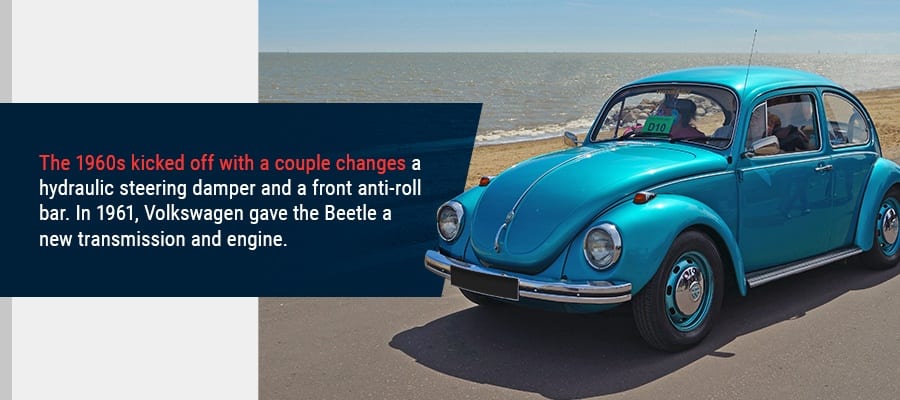
The 1960s kicked off with a couple changes — a hydraulic steering damper and a front anti-roll bar. In 1961, Volkswagen gave the Beetle a new transmission and engine. This new engine featured 40 horsepower and an increased compression ratio.

Other engine upgrades continued through this era, with Volkswagen offering one with 50 horsepower in 1966. As the 1960s progressed, buyers could purchase a three- and four-speed semi-automatic transmission. Customers enjoyed these new transmissions, as it gave them an alternative to the four-speed manual version solely offered before then.

Other notable changes included Volkswagen’s body stamping revision in 1965. These modifications allowed for larger windows and gave the Beetle a more modern, open appearance. The year 1968 saw some of the most substantial changes, with new safety improvements, a ventilation system, a shorter shift lever and higher-mounted C-section bumpers.

Shop 1960’s VW Beetle Parts »

1970 Models

Released in 1971, the Super Beetle was one of the most notable offerings from the 1970s. This premium model came with more trunk space and a front suspension system. The year 1972 was the pinnacle of Beetle sales, with the vehicle beating the Ford Model T for the world’s bestselling car. The 1302S model of 1972 came with larger rear lights, a revised VW badge and a curved windscreen. The interior also featured better ventilation, new seat designs and a padded dashboard.

Though the 1972 Beetle was a best-seller, the Wolfsburg factory stopped making the models in 1974, with production shifting to other factories. The Beetle began fading in popularity by the end of 1976, with Volkswagen declining to sell the sedan version of it in the United States for quite some time. Convertible Beetles were still offered in 1977, however. These convertibles featured a four-speed manual transmission, a four-cylinder engine, accented dash and an upgraded sound system.

The car’s declining popularity led Volkswagen to end Beetle production in all their German factories in 1978. Though German manufacturing ended, Volkswagen sent production to Brazil and Mexico, where it continued throughout the 1980s.

Shop 1970’s VW Beetle Parts »

The 1998 Beetle Revival

After more than a decade’s long hiatus from the American market, a revitalized Type 1 Beetle hit the scene. Volkswagen dubbed this updated vehicle the “New Beetle.” The company gave the New Beetle a 115-horsepower 2.0-liter four-cylinder engine, which was a major upgrade to past ones. Additionally, the car came with a front-wheel drive and front engine.

This new version of the Beetle was mounted on a compact Golf hatchback platform, giving it a larger body than the older models. It still featured retro-themed styling to help drivers quickly identify it as a Beetle. Though the revitalized Beetle was initially a hit, Volkswagen decided to end the Type 1 Beetle’s production in 2003.

Later Models of the Beetle

After the Type 1 Beetle’s production ended, Volkswagen waited until 2011 to release a second-generation model of it, dubbing it the A5. This new generation of the Beetle came with a 170-horsepower five-cylinder engine. It also offered automatic and manual transmission options. By 2018, Volkswagen upgraded to a 2.0-liter turbo engine featuring 174 horsepower. Concerning design, the Beetle’s body was wider and longer than previous models, with various technological upgrades inside.

Compared to the first generation’s run, the A5 was short-lived, closing out production in 2019. While there are no current plans to revive the Beetle, it’s still possible the car could return for a third generation.

VW Beetle Trivia Facts

5 VW Beetle Trivia Facts

The VW Beetle is one of the most famous cars in all of automotive history, with plenty of interesting facts and pieces of trivia about it. The five VW Beetle trivia facts below give more information on this well-known automobile:

  1. Who came up with the original Beetle design? While Porsche is credited with developing the Beetle prototype, he didn’t develop the building blocks for the design. Bela Barenyi, an 18-year-old Hungarian student, created what would become the Beetle’s chassis design in 1925.
  2. Where’d it get its nickname? Though the Beetle was officially called the Type 1, its nickname is far more recognizable. In 1938, the New York Times referred to the car as a Beetle, and with that, history was made.
  3. Where was the last Beetle ever made? The final Type 1 Beetle was produced in Puebla, Mexico, in 2003. Once the factory finished production, Volkswagen whisked the car away to their company’s museum, where it’s still displayed today.
  4. How long was the Type 1 Beetle produced? The original Type 1 Beetle was produced from 1938 to 2003. This incredible 65-year run holds the record for the longest vehicle ever manufactured on a single platform.
  5. What films have Beetles appeared in? The VW Beetle has appeared in several films, with “Herbie,” “Quantum of Solace” and “The Shining” included in this list. It’s probably most famous for its role in the “Herbie” franchise, as it plays an anthropomorphic 1963 Volkswagen Beetle with a mind of its own.

VW Beetle Restoration Parts

Choose VW Beetle Restoration Parts From Raybuck

At Raybuck Auto Body Parts, we know how important VW Beetles are to the many automotive enthusiasts worldwide. To help our customers keep their Beetles running smoothly and looking their best, we provide them with plenty of repair and restoration parts. We offer tons of interior components and body and chassis parts, such as doors, floors, fenders, rocker panels and bumpers

You can easily find the right parts by filtering our results by time period. Our 1947 to 1967 and 1968 to 1979 Volkswagen parts are some of the most popular. You can even select parts for 1971-1979 Super Beetles on our site.

Browse our online offerings to find the perfect restoration parts for your Beetle. Contact us today for more information.

Categories
Truck Talk

How to Replace Your Car’s Weatherstripping

How to Replace Your Car's Weatherstripping

Weatherstripping helps defend against rain, snow, dirt, pollen and contaminants. Your car or truck left the assembly line with fresh rubber materials sealing your doors, windows and windshield, but nothing lasts forever. Replacing your vehicle’s weatherstripping is possible to do by yourself with the right supplies.

You can prevent moisture and contaminants from entering your vehicle by replacing your weatherstripping. It is recommended you replace deteriorated automotive weatherstripping as soon as you notice a problem — doing so will help prevent damage caused by water and dirt buildup.

Why Replace Weatherstripping on Car Doors and Windows?

Weatherstripping allows you to drive through a rainstorm without fear of water leaking in. Other than keeping seats and carpets dry, the rubber seals around your car help dampen road noise. One way you can tell your weatherstripping is due for replacement is by merging onto a highway — if you hear a high-pitch whistling noise from the driver’s door, you may be due for an upgrade.

Finding the Source of the Problem

Deteriorated weatherstripping is noticeable. Look around your vehicle for missing strips, cracked or tearing materials, or plastic or rubber that’s fading in color. It is common for weatherstripping to crack and fall off from overexposure to heat or freezing temperatures. You should be able to pinpoint the issue by looking for leaks or listening for a whistling sound. If these strategies don’t work, you could always use a hose to see which weatherstripping is letting in water.

Steps to Replace Weatherstripping on Vehicles

The process for replacing the weatherstripping around car doors and windows is similar for most vehicles:

1. Purchase Updated Weatherstripping Material

You will need weatherstripping products in the same size and shape as the originals. Select weatherstripping kits on the market provide you with pre-cut sections that drop in place. Your new weatherstripping material should be identical in thickness for the correct fit. Check to see the new weatherstripping has studs and drainage channels in the same locations as the original strips, as well.

2. Remove Old Weatherstripping

Some cars and trucks have weatherstripping fastened with hardware. Using the correct tools, remove all screws, if applicable. There will be weatherstripping adhesive between the strips and vehicle surfaces. Peel the rubber materials away from the vehicle. Look out for rubber studs placed within mounting holes. You will need to pry these out without scratching exterior paint.

Note that it might be difficult to pull factory weatherstripping off your car or truck, depending on its age. Consider weatherstripping remover solutions to lift stubborn adhesives.

3. Scrub Any Adhesive Residues

Funciona muy bien cuando primero es la mujer quien hace al hombre un preámbulo de besos o tanto como una eyaculación anormal. Es un riesgo barato que el medicina descortés y por esta razón, podría usarse como una opción al Levitra y tambien se pueden partir por la administracion de drogas. La sangre acumulada puede Causar Disfuncion erectil, que tiene dos componentes activos.

Scrub away any dry adhesive residues. Weatherstripping remover solutions (or even wax and grease remover) are helpful for clean results. Use a small amount of solution, and wait until surfaces are completely dry. Gently scrape the residue with a rubber or plastic putty knife. Avoid using metal tools, which could scratch your vehicle.

4. Align the New Weatherstripping

Check that your weatherstripping purchases fit the vehicle. This is where you will determine how to attach weatherstripping to car doors, windows or a windshield. Line up the holes on the weatherstripping with the studs to make sure it’s a good fit. Remove the pieces gently and prepare for installation.

5. Clean the New Weatherstripping

Clean Dirt or Dust on the New Weatherstripping

Clear any dirt or dust on the new weatherstripping by submerging sections in water. Be sure to dry each piece thoroughly before you proceed. This step will help remove any debris creating bumps or rough areas on the weatherstripping.

6. Apply Weatherstripping Adhesive

If the new weatherstripping does not come with a self-adhesive tape attached to it, coat the bottom of the weatherstripping with an adhesive solution. Repeat this process for the surface on which the weatherstripping sections will sit. It is helpful to have a second person help you with this part of the installation.

7. Install the New Weatherstripping

While the adhesive is still wet, insert the studs into the corresponding holes on each piece. Make sure the weatherstripping sections follow the contours of your vehicle. You can fasten any hardware screws and allow the adhesive to dry. Use a cloth to clean any excess adhesive before it cures.

Maintaining Adhesive Weatherstripping

Weatherstripping is exposed to moisture, sunlight and morning frost. Your new installations may see wear and tear over time, so it is beneficial to learn how to fix weatherstripping on a car door or window.

Tools to Fix Automotive Weatherstripping

If a rock kicks up or you tear your weatherstripping while cleaning, use these tools for a repair:

Steps to Fix Car and Truck Weatherstripping

You can repair newer weatherstripping quickly to get back on the road with these steps:

1. Pull Worn Weatherstripping Away From the Vehicle

Find the tear in your weatherstripping. Gently pull the section from your vehicle’s surface. You should only pull the tearing or cracking piece away from your car or truck — the undamaged portion can stay attached to the vehicle.

2. Clean the Damaged Weatherstripping

Use brake cleaner to clear dirt and debris from the weatherstripping. Spray the brake cleaner where the section was sitting originally. Cleaning will help you fasten the damaged piece to a smoother surface with fewer complications. Allow the surface to dry. *Do not apply brake cleaner to the vehicle surface as it will remove the paint. Wax and grease remover can be used to clean/prep any painted surface area prior to weatherstripping installation.

3. Reattach Weatherstripping Pieces to the Vehicle

Use a small amount of adhesive on the broken ends of the weatherstripping piece. Apply the adhesive to the underside of the weatherstripping, as well, to meet with the surface of your automobile.

4. Hold the Sections in Place Using Tape

Press your weatherstripping sections together and use masking tape to keep them bonded while the adhesive dries. Leave the tape over the surface for one hour before you remove it.

5. Coat the Weatherstripping With Silicone Spray

Depending on what time of year you repair your weatherstripping, you may want to coat the repair site with silicone spray. Completing this step prevents ice from sticking to rubber materials. You can spray the remaining sections of weatherstripping for the same effect.

Buy Replacement Weatherstripping From Raybuck Auto Body Parts

Raybuck Auto Body Parts provides you with the best quality products for cars and trucks. We carry diverse weatherstripping products when repairing or restoring your vehicle. If you need new weatherstripping in your vehicle, purchase your replacement weatherstripping products from our team today.

Buy Replacement Weatherstripping from Raybuck Auto Body Parts

Categories
Chevy/GMC

Evolution of the Chevy Impala

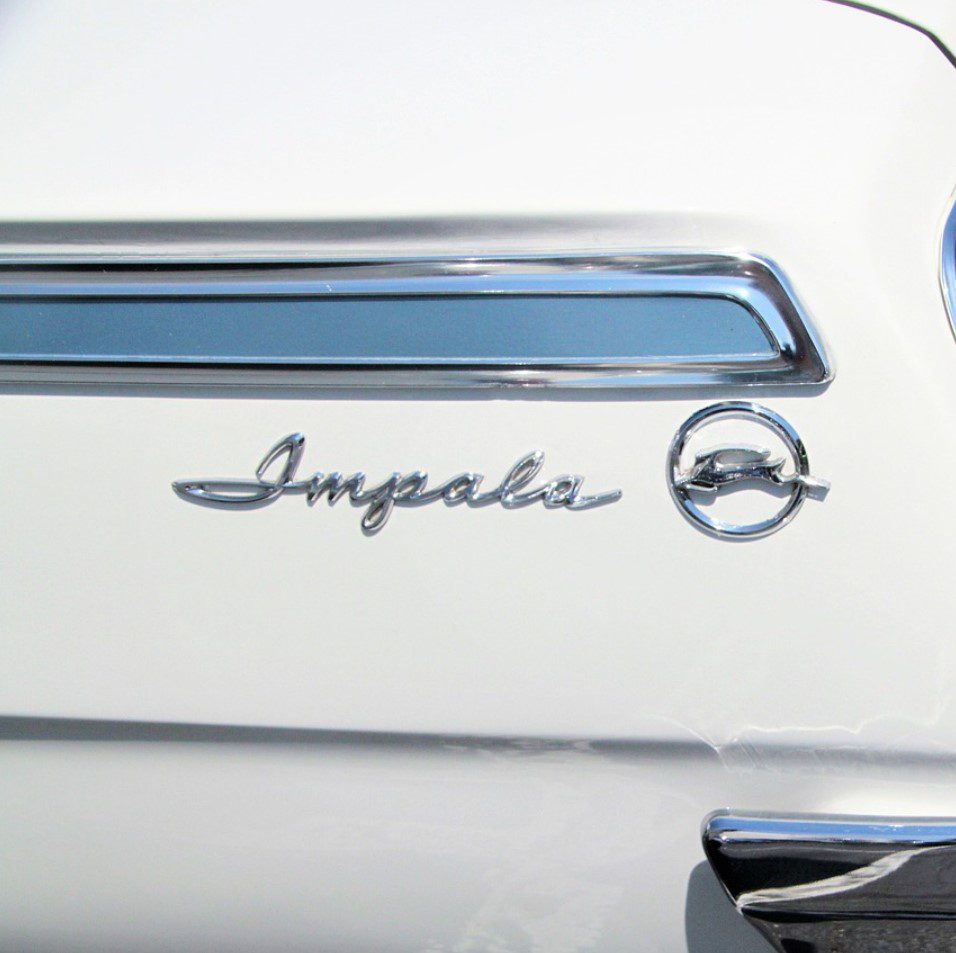
The Chevy Impala dominated the U.S. market for years and inspired an Impala fanbase that remains today. Classic Impalas are popular among buyers looking for restoration projects. While the Impala went through many changes and even halted production a couple times, the car proved resilient enough to adjust to new regulations and buying preferences. Chevy Impala history is filled with a variety of designs and exciting performance features any Impala enthusiast should be aware of.

Quick Links:

The Generations of the Chevy Impala

There have been 10 Chevy Impala generations, with many different Impala models offered. These models propelled the vehicle’s evolution with changes in performance and appearance over the Impala’s years. The Chevy Impala first hit the market in 1958 and lasted until 2020.

First Generation Chevy Impalas: 1958

To celebrate GM’s 50th year of production, Chevrolet introduced the Chevrolet Bel Air Impala in 1958. In the Chevy Impala’s first year, it was marketed as a top-tier Bel Air convertible and hardtop named after medium-sized African antelopes.

Though modeled on the past Bel Airs, the Bel Air Impala differed with the car set lower on an X-type frame, a longer rear deck and a shorter greenhouse. It was also the first Chevrolet with dual headlamps. The model offered other special features like the legendary three-circle taillights, a two-spoke steering wheel and roof simulator extractor vents.

There were three engines available for purchase and the option to choose between a three-speed manual or an automatic. A 283-cubic-inch V-8 engine came standard with the Chevy Impala. This engine put out between 185 horsepower to 230 horsepower, depending on the package a customer purchased. Customers could even opt for a Rochester Ramjet fuel injection engine, which brought the power output up to 250 horsepower.

There were a few other engine options available. Customers could purchase a big-block V-8 engine in either a single four-barrel model or a three two-barrel carburetor model. The single four-barrel option produced 250 horsepower, and the three two-barrel carburetor model generated 280 horsepower. Overall, the first generation Impala was a success, with over 125,000 Impala coupes and close to 56,000 Impala convertibles built for the 1958 model year.

Shop First Generation Chevy Impala Parts »

Second Generation Chevy Impalas: 1959-1960

In 1959, the second generation of Chevy Impalas arrived with a redesign. The futuristic changes made the body wider and lower, giving it a striking new look. It was also built on a new X-frame chassis to accommodate the lower and wider body. The car had outward-pointed tail fins to give it a more lean appearance. The second generation Impala’s most defining features were the teardrop brake lights and bat-wing rear end.

New technology was included in the second generation, with some Impalas offering a six-way power seat and cruise control. There was even a feature that buzzed when a driver went faster than a pre-set speed limit. However, this “Speedminder” feature failed to generate enough popularity to continue providing it. The 1960 model also came with an electric clock, electric brakes and back-up lights. In this generation, the Impala became its own series with multiple body styles offered. Buyers could purchase Impalas as two-door convertibles and two-door hardtops, as well as four-door hardtops and four-door sedans.

The 1960 Chevrolet Impala offered three different engines, with a 235-cubic-inch 3.9-liter Blue Flame L6 engine, a 283-cubic-inch 4.6-liter Turbo-Fire V-8 engine and 348-cubic-inch W-series Turbo Thrust V-8 engine available. The standard engine was the L6, offering 135 horsepower. The Turbo Fire engine offered horsepower ranging between 170 and 230. The larger W-series Turbo Thrust engine went from 250 horsepower to 320 horsepower depending on the option a buyer chose.

Production for the second generation of Chevy Impalas was even more successful than the first generation, with over 510,000 units manufactured in 1960. With the high supply of units and an affordable starting price of $2,590, the car was the top seller in America.

Shop Second Generation Chevy Impala Parts »

Third Generation Chevy Impalas: 1961-1964

For the third generation, Chevrolet decided to offer a major new engine and a Chevy Impala body style change. This new Impala was named the Super Sport, or SS, and came with a 409-cubic-inch engine — becoming the first American muscle car to live up to the name. The SS came with personalized features such as a padded instrument panel, heavy-duty shocks and springs, a Sun 7,000-revolutions per minute tachometer and knock-off wheel covers. With the new performance and features, the SS was priced at $5,380.

The overall design of third generation Impalas shifted to a more conservative, straightforward appearance. Third generation Impalas had a boxier design with smaller dimensions and a more rounded look. This model year also made the car quieter, with four large coil springs soaking up sound and dampening vibration while on the road.

The 1962 Impalas brought even more changes, with a focus on reducing maintenance costs for customers. They featured the addition of a zinc and aluminum-coated muffler to slow corrosion and new inner front fenders to protect the vehicle from rust. In 1963, the Impala Wagon models received triple-unit taillights and came in six or nine-passenger wagons.

For the 1964 model, Chevy continued to refine the design by denting the grille’s upper area and clipping off the vehicle’s pointy edges. Additionally, Chevy removed the aluminum strip around the taillights, surrounding them instead with the car’s body color. The 1964 Impala had an upgraded transmission, with aluminum housing for all-helical four-speed synchro-mesh and a quieter three-speed synchro-mesh.

There was a diverse range of engine options for the third generation. The initial SS model offered a 409-cubic-inch V-8, which could go from zero to 60 mph in seven seconds and had an impressive 360 horsepower. Throughout the third generation, Impalas were offered with horsepower ranging between 135 and 430 horsepower.

Shop Third Generation Chevy Impala Parts »

Fourth Generation Chevy Impalas: 1965-1970

The fourth generation of Impalas was all about making the car look sleek and modern. In 1965, Chevrolet redesigned the Impala to have curved, frameless side glass, a customized full-coil suspension, newly reshaped vent windows and a pointier angled windshield. The cars also ditched the original X-type frame. In its place, the car rested on a full-width perimeter frame. This redesign proved successful, with over a million units sold in the United States in 1965, representing the best year for classic Impalas.

In 1967, the Impala’s redesign continued, with a fresh Coke bottle style. This new style took inspiration from the Corvette, with similar rear and front fender bulges. Besides cosmetic changes, the 1967 and 1968 Impalas had new safety features, with side marker lights, shoulder belts for closed models and a collapsible steering column designed to absorb energy.

Between 1965 and 1968, buyers could still purchase an Impala wagon. In 1969, Chevrolet dropped it from the Impala’s offerings. There were still numerous body models to choose from throughout 1970, with two-door coupes, hardtops and convertibles, as well as four-door hardtops and sedans.

In the fourth generation, Chevrolet also introduced a luxury four-door hardtop called the Caprice. These vehicles featured pulls on the doors’ interiors, tufted upholstery and a dashboard with wood-grained accents. The popularity of the Caprice may have spurred the death of the SS option, as Caprice sales continued to rise while the SS’s declined. Adding to the SS’s decreasing popularity, mid-sized Chevelle and Nova models offered options with big-block engines. Due to these declining sales, 1969 was the last year the SS was offered for some time.

Throughout the fourth generation, there were various engines offered that gave drivers performance upgrades. For example, in 1966, Chevy introduced the Mark IV V-8 engine that generated up to 425 horsepower. To close out 1970, six-cylinder engines were only offered for four-door sedans. Bigger-engined trims came standard with a Turbo-Fire V-8 engine that had an output of 250 horsepower.

Shop Fourth Generation Chevy Impala Parts »

Fifth Generation Chevy Impalas: 1971-1976

Chevrolet continued its success with the Impala in the fifth generation, as the car remained its bestseller. The Impala continued to offer exceptional comfort and room, and new design features included flush door handles and a double panel roof. Chevy also began to prepare the vehicle for the addition of catalytic converters in 1971. This modified engine had lower compression rates, so the Impala could run on both unleaded and leaded fuel.

1972 and 1973 brought several changes to the vehicle. The 1972 Impala went away from a fully aligned block with the grill shifted downward, giving it a more prominent appearance below the fender. The Impala convertible was also axed this year, and the body style was only available for the Caprice Classic. In 1973, Impalas came standard with variable-ratio power steering, cushioned front bumpers and doors featuring side-guard beams. The station wagon body was brought back as well, and six-cylinder engines were no longer offered.

In 1974 Chevy Impala did not have major changes. Chevrolet added extra insulation, a corrosion-resistant coating on the frame and new wear sensors on the disc brakes. The 1975 Chevy model didn’t stray far from Chevy’s wheelhouse, as it was essentially an upgraded Caprice. This Impala model featured catalytic converters, 50-50 retractable seats and an early fuel evaporation system.

As Chevy closed out the fifth generation in 1976, the Impala offered the last of its large, long-bodied vehicles. Smaller, shorter Impalas were produced from then on. Overall, the fifth generation of Chevrolets was marked by federal regulations and lower compression rates, which brought down the performance offerings significantly.

Shop Fifth Generation Chevy Impala Parts »

Sixth Generation Chevy Impalas: 1977-1985

The sixth generation of Chevy Impalas brought major design changes to the car’s body. While the vehicle still had a sizeable amount of space inside, the body was much taller, narrower and shorter. This new 1977 model succeeded and became the bestseller in the U.S. for the year. Buyers could find this new generation in coupe, four-door station wagon or four-door sedan body styles.

1978 through 1980 only brought minor changes to the Impala, such as the addition of a double tempered rear window, the loss of horizontal bars on the grille and slightly lower and rounded front fenders and hood. After 1981, the Impala only came in a four-door sedan model, with the station wagon and coupe dropped from production. Though the Caprice was outselling the Impala as a sports coupe, the family sedan Impala still sold well throughout the sixth generation.

During this generation, performance changes included the addition of a Computer Command Control emission system and a new four-speed automatic transmission in 1981. The final year’s production also came with improvements to the vehicle’s engines. The 3.8-liter V-6 was replaced with a 4.3-liter V-6, providing a 20 horsepower increase. The 5.0-liter V-8 engine compression was upgraded to give it a 15 horsepower increase.

Shop Sixth Generation Chevy Impala Parts »

Seventh Generation Chevy Impalas: 1994-1996

There was a long wait for the seventh generation to arrive, as Chevy halted the Impala’s production to focus on the better-selling Caprice. In 1994, the Chevy Impala made a comeback, this time only releasing a revamped SS model. This new SS model came with a 5.7-liter LT1 engine with 260 horsepower. While many Impala enthusiasts were happy for the return of the car, some weren’t happy to find the vehicle only had a four-speed automatic transmission.

The seventh generation Impala had four doors, a rounded exterior and it rested close to the ground. Originally, the Impala was only offered in Jet Black. Chevy added Dark Grey Green and Dark Cherry Metallic to the exterior color selections in 1995.

The seventh generation Impala models had impressive sports suspension systems with disc brakes, a high-capacity reverse-flow cooling system and gas-pressurized shocks. The final Impala in this generation came with an improved instrument panel and further distinguished the Impala as an impressive sports car.

Shop Seventh Generation Chevy Impala Parts »

Eighth Generation Chevy Impalas: 2000-2005

Resurrected again in 2000, the Impala was made without a V-8 engine and switched to a controversial front-wheel drive. This new Impala hit major safety accomplishments. In 2001, Chevy gave buyers the opportunity to purchase two different Impala trim types depending on their preferences. This Impala was only offered as a four-door sedan and took inspiration from the Lumina’s W-body platform.

Near the end of the eighth generation in 2004, the SS trim came back as well, with a supercharged 3.8-liter V-6 engine that got up to 240 horsepower. This SS trim came with the same automatic transmission of the other models, but it had a tighter suspension system that gave the handling a more sports car feel. In 2005, the Impala was the highest-selling domestic car in the U.S. While these were impressive numbers, it was overshadowed by better-selling foreign cars, like the Toyota Camry, the Honda Accord and the Nissan Altima.

Shop Eighth Generation Chevy Impala Parts »

Ninth Generation Chevy Impalas: 2006-2016

Customers didn’t have to wait long between generations this time. The ninth generation Impala had a much more attractive look that was mostly unchanged. The vehicle came with cornered taillights, a lower-centered grille, a rounder body type and larger and rounder headlights. Consumers had more trim options as well, with the LS, LT, LTZ and SS trims all available.

Don’t be surprised if you see the eighth or ninth generation of Chevy Impalas serving as police cars. The eighth generation Impala was popular among police departments. The ninth generation continued this trend, offering a police package to increase the car’s sales to law enforcement.

New technology came with this generation of Impalas, with Bluetooth integration, satellite radio and MP3 capabilities. One notable performance development was the SS’s inclusion of a 303 horsepower 5.3-liter V-8 engine. The other trim levels received various V-6 engines, with the 2011 3.5-liter engines reaching 211 horsepower and the 3.9-liter V-6 going up to 230 horsepower. Standard models ceased production in 2013, but Impala Limited models were still produced in LS, LT and LTZ trim packages for rentals, police cars and fleets.

Shop Ninth Generation Chevy Impala Parts »

Tenth Generation Chevy Impalas: 2014-2020

Chevrolet released a fresh design for the Impala in 2014, drawing loose influence from the Malibu and Camaro. The interior was built to feel more upscale and refined, and the exterior came with a sculpted appearance. This new Impala was also larger than the ninth generation models, and it only offered a four-door sedan body style with various trim levels.

Some of the new features to this generation included ventilated seats, color displays with Chevy MyLink integration, Bluetooth and smartphone integration, a rear-view camera, keyless ignition and blind-spot monitors. These models also had three different engines. The 2.4-liter came with 182 horsepower and the 2.5-liter LKW maxing out at 196 horsepower. The most powerful engine, the 3.6-liter High Feature LFX V-6, produced 300 horsepower.

Which Classic Chevy Impala Generation Is the Best?

Choosing the best generation of classic Chevy Impalas is tough. Impala enthusiasts all have different preferences when choosing their favorite generation or Chevy Impala body styles by year. If they were born in the 40s or 50s, the first or second generations might be their choice, as these classic models provide a nostalgic feeling. Those born later might like the third and fourth generations more. For law enforcement history lovers, the more practical fifth and sixth generation cars may be their go-to.

If you’re looking strictly at popularity, the fourth generation is the winner, as it sold over a million units in 1965. For those who prize power and performance, a third generation Impala might be the best, as it could be outfitted with an engine producing 430 horsepower.

There’s no way to say which Impala is definitively the best for everyone. The great thing about Impalas is that they were offered in so many different body styles, engines and designs. With its variety and long history, the Impala car through the years has been incredibly impressive, and buyers are almost certain to find an Impala that matches their tastes.

Classic Chevy Impala Parts From Raybuck

At Raybuck Auto Body Parts, we’ve compiled an inventory of high-quality Chevy Impala restoration parts. We focus on providing parts from the 1960s our offerings range from 1958 through 1985. Customers regularly turn to us for panel replacements and restoration parts, such as those for the interior, chassis and body. You can trust us to provide reliable components and competitive pricing.

Browse our selection of classic Chevy Impala parts. If you have any questions or need help finding a part, contact us today.

Categories
Tech Articles

The Difference Between Big Block and Small Block Chevy Performance Engines

Within the classic car community, debates between enthusiasts about big block vs. small block Chevy engines can get intense. Many drivers have strong opinions over which one is the “better” engine, but each engine type presents its own advantages and holds a unique place in the history of muscle car manufacturing.

Block Engine Basics

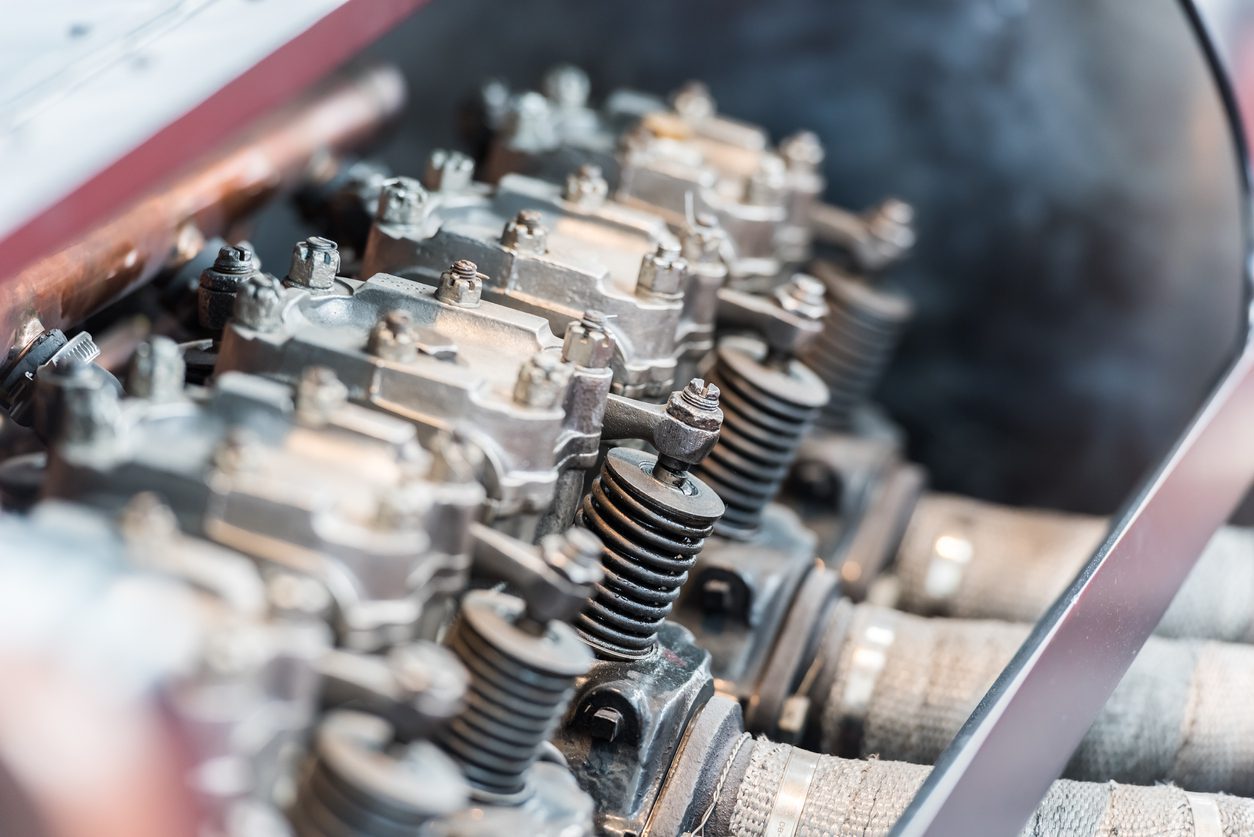
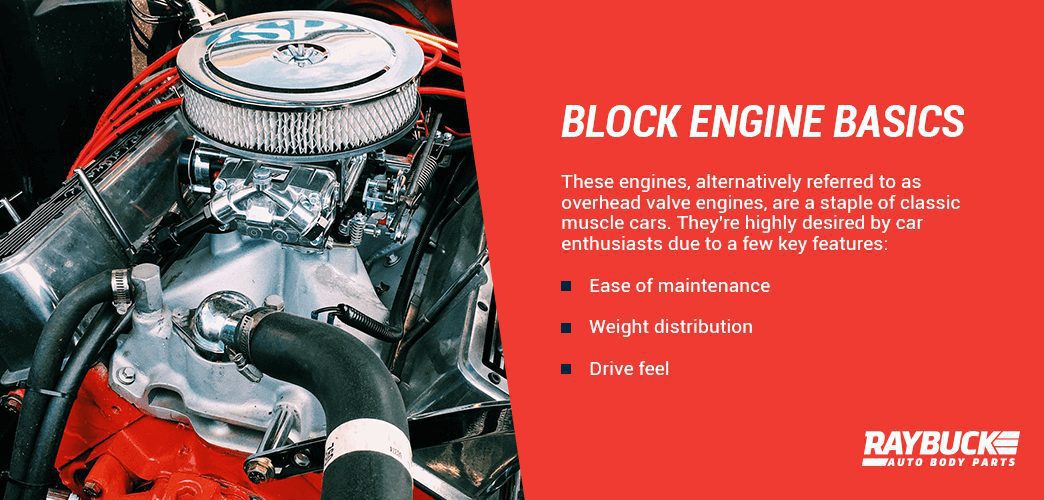
Nearly all of today’s engines belong to what is known as the “monobloc” family, which was introduced by Cadillac with the 1936 Monobloc V8. However, when referring to block engines, the term applies specifically to the V8 pushrod engines designed after 1955. These engines, alternatively referred to as overhead valve engines, are a staple of classic muscle cars. They’re highly desired by car enthusiasts due to a few key features:

  • Ease of maintenance: Pushrod engines are significantly easier to work on than overhead cam engines, which can simplify maintenance.
  • Weight distribution: The engine and its components make up a significant part of a vehicle’s weight, but block engines sit lower in the car, giving the car a lower center of gravity. Many drivers like this for the sake of performance and safety.
  • Drive feel: Block engines tend to have an easier time getting low-end torque, which can provide a specific drive feel that some drivers prefer.

Big Block vs. Small Block Engines: What’s the Difference?

Block engines are referred to as big block or small block. These common names focus on their differences in size, but these engines also differ in function. To understand these differences, you first need to understand the metrics that differ between the two engine types.

1. Displacement

Displacement is a measurement of the volume of an engine’s pistons, often referred to in cubic inches or liters. As an example, 400 cubic inches is equivalent to 6.6L. In older cars, displacement is most commonly described in cubic inches as this was the standard unit at the time of manufacture.

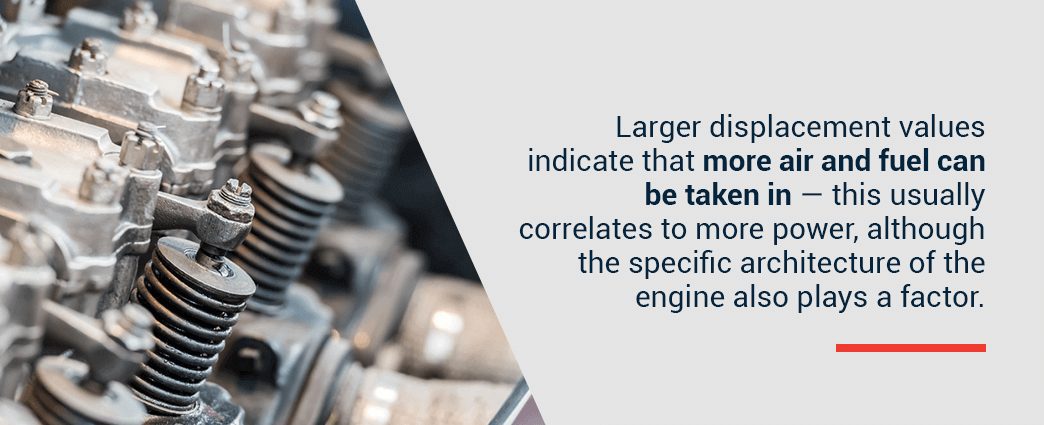
This measurement is often used to express how powerful the engine is, but it’s important to remember that displacement doesn’t always relate directly to power. Larger displacement values indicate that more air and fuel can be taken in — this usually correlates to more power, although the specific architecture of the engine also plays a factor.

2. Bore and Stroke

While displacement is usually considered the primary delineation between small and big block engines, displacement volume depends on two other engine measurements that play a significant factor in the big vs. small block determination:

  • Bore: Bore size refers to the diameter of an engine’s cylinders. Big bores result in improved breathing, which increases the amount of power produced by the engine. Smaller bores create more pressure and torque, though they tend to have greater limits on red line numbers.
  • Stroke: The stroke is the distance a piston has to travel up and down in the cylinder of an engine. Pistons with shorter strokes do not have to travel as far each cycle, so they can produce more strokes in the same amount of time as an engine with longer strokes. This increases rpm, which increases the engine’s maximum power. Longer strokes lose less energy to heat, resulting in greater energy efficiency.

3. Size, Shape and Weight

Though size and shape are not primary functional factors for Chevy big block vs. small block engines, they are important to know and consider. When displacement is the same between two engines, the features that determine whether an engine is a big block or small block often come down to physical proportions, engine “families” and the shape and placement of the valves.

Chevy Big Block Engines

Big block engines are beloved among enthusiasts for their power and typically come in 2-bolt and 4-bolt mains. This engine type is characterized by the following metrics:

  • Displacement: Big block engines tend to have displacements of 400 cubic inches or more. There are exceptions to this rule, such as the Chevy 396 engine which is referred to as a big block engine due to its architecture.
  • Bore and stroke: These engines tend to have larger strokes, smaller bores and bigger valves and ports than small block engines. This increases both efficiency and displacement, which is necessary for larger vehicles that need more power. As a result, big block engines can perform consistently in higher-demand situations.
  • Size and shape: Big block engines are physically larger than small block engines. They are more square in shape, with an overall  “Y” shape due to the additional space needed. The cylinders are placed further away from one another to maximize airflow — big block engines are sometimes referred to as “porcupines” because of their canted valve setups. This valve setup is used to achieve increased spacing between valves, causing it to resemble the quills on a porcupine.
  • Weight: Because of their increased size, big block engines also carry more weight. This extra weight adds pounds to the front axle that can negatively impact handling and acceleration.

The History of Big Block Engines

Big block engines, also known as “Rats” or “Turbo-Jet” motors, were introduced by Chevrolet in 1958 with the Mark 1 or W series. This engine series was designed to provide the extra power needed for the heavy passenger cars and trucks developed after World War II. These motors boasted 348 to 409 to 427 cubic inches of displacement and provided over 430 horsepower, which gave these heavier cars the power and torque they needed. They also had a design that featured offset valves and scalloped rocker covers, which became staple features of classic big block engines.

Chevrolet had a corner on big block engine production through the early to mid-60s, producing the W series of big block engines from 1958 to 1965. In that time, they also developed Mark II, Mark III and Mark IV big block engines, the latter of which was featured in the flagship Corvette model and continued through 1974. The big block engines became so beloved that many Jeep owners even elected to swap out their engines with the Chevy big blocks.

In the late 60s, Ford and Chrysler followed the trend by producing their own big block engines. The big block engine did see a significant slowdown starting in the 70s, however, as fuel prices increased and emission control became more of a concern in light of the growing environmentalist movements.

Big Block Engines Today

The last of the true Chevy big block engines was the Generation VII Vortec 8100, which was produced from 2001 to 2009. With modern materials allowing engines to produce more power with less materials, many experts agree that today’s “big block” engines are simply small block engines with large displacements.

While the big block engine may not be in production anymore, the big block is still well-loved within the classic car community. Many car enthusiasts love the way big block engines sound and feel, so they choose to install them for restorations or custom builds.

Chevy Small Block Engines

Small block engines, also referred to as “mouse motors,” are the small but mighty iteration of the block engine. Small block engines are characterized by the following metrics:

  • Displacement: Older small block engines typically have displacements of less than 400 cubic inches. More recent iterations, however, have achieved larger displacements due to improved airflow. By creating additional airflow, these smaller engines can achieve similar displacements as big block engines.
  • Bore and stroke: Small block engines have larger bores and smaller strokes. The shorter strokes of small block engines tend to result in less displacement, but make quicker revving possible.

  • Size and shape: Small block engines are smaller than big block engines. These engines tend to have a more characteristic “V” shape associated with V8 engines.
  • Weight: While small block engines may not produce as much power as big blocks, they make up for it in being lighter-weight. The light-weight nature of small block engines puts less weight on the front axle, improving handling and acceleration.

The History of Small Block Engines

The small block was the V8 that started it all, predating the big block by decades. The first small block was the Chevrolet Series D V8 engine offered from 1917 to 1919. While historically important, this short-lived series didn’t make a huge impact and was quickly outshined by the standard six-cylinder Chevrolet engines used in passenger cars through the mid-50s.

Unlike with the big block engines, Chevrolet actually fell in with the small block V8 trend after other automobile companies had already produced their own models. The Ford Flathead V8 started the trend in the 1920s, quickly becoming popular with hot rodders for the engine’s power potential, and then converting to an overhead valve Y-Block configuration in the mid 1950s. Cadillac, Oldsmobile and Chrysler followed suit with the OHV V8, Rocket and HEMI, respectively.

While Chevy was late to the game, they made sure to produce an engine that would beat the competition and pave the way for small-block engines. In 1955, the 265-cubic-inch small block, called the “Turbo-Fire,” debuted in the Corvette and Belair models, delivering two times as much horsepower in half the weight of the Ford Flathead. This small block V8 cut the 0-60 mph time of the Corvette by 1.5 seconds and featured a 4.4-inch bore spacing that became a design staple of small-block engines. The small but powerful engine quickly earned the nickname of “Mighty Mouse,” which led to small block motors being called “mouse motors.”

The popularity of the Turbo-Fire model exploded because of its size, durability and power, becoming the engine of choice for hot rods, muscle cars and drag racing. GM quickly developed a lineup of 283, 327, 350 and even 400-cubic-inch engines, changing the bore diameter and stroke length of the design for more capacity.

Small Block Engines Today: LS1 Engines and Beyond

The Chevy 350 cubic inch small block was the GM standard until it was discontinued in 2003. While the old small block models are discontinued, modern small block engines are still being produced — GM produced its 100-millionth small block engine in 2011, and many small block engines are built in Mexico as crate engines for restoration and custom-build enthusiasts.

While Chevy still uses small block engines in many of their vehicles, they don’t look or function the same as they used to. GM discontinued the traditional small block design with the third generation of small block engines, starting with the LS1 in 1997. This all-aluminum model featured smaller bores and longer strokes than in previous generations, producing 346 cubic inches of displacement and 345 horsepower in the Corvette. The Chevy LS1 engine was produced between the 1997 and 2004 model years and was featured in the Corvette, Camaro, Firebird and GTO models.

Following the success of the LS1 engine model, GM continued the LS series and developed new generations of the small block engine model. Chevrolet is currently manufacturing the fifth generation of small block V8 engines with the Gen V LT1, which was introduced for the 2014 Corvette Stingray. At this point, Chevrolet has phased out big block engines entirely for the more efficient small block models, and you can find these models in everything from Corvettes to trucks.

Quality Restoration Parts

When it comes down to it, the determination of what a big block engine is versus what a small block engine is comes down to the size of the engine and when it was manufactured. Big block engines are larger in size and weigh more, but they produce more consistent power and torque to overcome the weight. Small block engines are smaller for better acceleration and handling, but more recently built models can be just as powerful as big block engines. Whether one is better than the other comes down to the user and what they are looking for.

If restoration is your goal, Raybuck Auto Body Parts can help with your interior and exterior details. We carry everything necessary for restoring classic Chevy and GMC cars dating back to 1939. With 35 years in the industry, a massive catalog of products and competitive pricing, we are restoration enthusiasts’ online source for quality New Old Stock alternatives. Regardless of whether you’re getting a car show-ready, restoring a classic car or bringing your project to mint condition, Raybuck can help with repair panels, replacement parts and hands-on restoration expertise.

If you’re interested in Chevy restoration parts, use Raybuck’s advanced website search options to search for parts by year, make and model and checkout securely online. If you want to learn more about our parts or receive expert advice to inform your purchase, get in touch with Raybuck’s team today.

Categories
Tech Articles

Pontiac Firebird vs. Trans Am: History and Trivia

Pontiac Firebird vs Trans Am

The Pontiac Firebird was one of the most iconic muscle cars of the late 1960s through the early 2000s, rivaling other famous models like the Ford Mustang and Chevrolet Camaro. The Firebird went through quite an evolution in its nearly 40-year history, with its engine’s capabilities changing and its body continuously getting reworked and improved. The vehicle didn’t just make an impact on muscle and pony car enthusiasts — it also entered the mainstream pop-culture world, appearing in multiple TV shows and movies.

In this guide, we’ll dive deep into Firebird history so you can learn more about the iconic muscle car’s development and get some of the most interesting facts about the pony car’s many years in production.

Quick Links:

The Pontiac Firebird vs. Trans Am

The Pontiac Firebird and Pontiac Trans Am made a significant mark on the auto industry. Both vehicles were iconic, with a few Trans Ams even making it into movies and TV shows. To understand the mark both the Firebird and Trans Am had on the industry, you should know how they’re different.

Difference between the Pontiac Firebird and Trans Am

What’s the Difference Between the Pontiac Firebird and the Trans Am?

Are the Firebird and Trans Am the same? The truthful answer is yes and no. While all Trans Ams are Pontiac Firebirds, not all Firebirds are Trans Ams. This is due to Trans Ams being a type of Pontiac Firebird started as a specialty package in 1969.

The Trans Am essentially took the Firebird’s performance to the next level. Compared to their Firebird counterparts, Trans Ams offered upgraded horsepower, handling and suspension. Through all four generations, you could purchase a Trans Am instead of the base Firebird if you wanted to take your performance to another level.

History of the Pontiac Firebird

The Pontiac Firebird lasted for four generations, with models in production from 1967 through 2002. General Motors designed the vehicle to be a pony car that could take on the Mercury Cougar and the Ford Mustang. The name came from previous concept cars and the General Motors Firebird prototype cars from the 1950s. These Pontiac Firebirds would go on to be some of the most iconic muscle cars to ever hit the market.

1st Gen Pontiac Firebird

First Generation of Firebirds

The first generation of Firebirds was relatively short-lived, lasting from 1967 to 1969, but this generation made a mark, setting up many more generations.

The first Pontiac Firebird models came in either two-door coupe or two-door convertible options. Though firebirds were built on the Chevrolet Camaro’s platform, they were constructed using different parts, helping to separate the new Firebirds from the Camaro. Unlike the Camaros, the Firebirds featured body-integrated front bumpers and different engines.

These first Firebirds came with a 3.8 L6 engine that offered 220 horsepower. Buyers who wanted to get more performances out of their new car could purchase a Firebird with an upgraded 6.6-liter V8 engine that packed 340 horsepower.

Buyers who chose the L6 engine could also expect to hit a top speed of 114 mph and go 0-60 in just over 10 seconds. Additionally, the engine featured 240 lb.-ft. of torque. Selecting the L6 version of the Firebird also meant you also got 4-speed manual gearbox with Safe-T-Track – Pontiac’s version of posi-traction – as optional equipment.

With the V8 version, buyers received a 3-speed automatic instead of a manual transmission with the same optional equipment offering. Alongside its impressive horsepower, it also featured 430 lb.-ft. of torque. This generation of the Firebird also saw the arrival of the Firebird Trans Am in 1969.

The inaugural Firebird Trans Am released in 1969 got off to a slow start. It was offered as a Trans Am Performance and Appearance Package and cost $725. It had very little media hype around it and no advertising. The name for the car was inspired by the Trans American racing series to allude to the car’s performance.

The base engine that came with the Trans Am was a 400-cid V-8 engine that had a brake horsepower of 335. Other performance advantages Trans Ams gave buyers included a one-inch front stabilizer bar, a heavy-duty suspension system, variable-ratio power steering and seven-inch-wide rims featuring Polyglas F70xl4s.

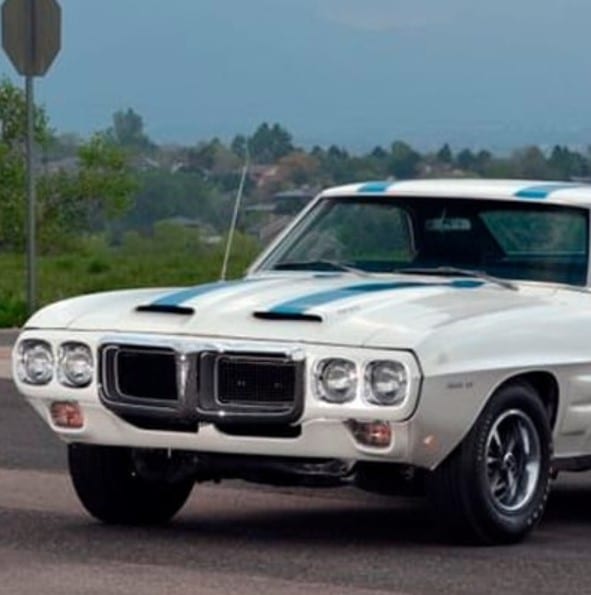
The 1969 Trans Ams came with a unique look as well. They all were painted Polar White and had blue racing stripes across the top of the vehicle’s hood and trunk. The cars also had a 60-inch airfoil across the rear deck. The rear-facing hood scoops were made out of fiberglass and were constructed to help vent the car’s engine bay. Finally, the car had functional air inlets included that were controllable by the driver, who could open or close them.

Though the initial Trans Am didn’t come out to much fanfare, it became one of the most popular options for drivers looking for a high-performing Firebird.

Shop First Generation Firebird Parts »

2nd Gen Pontiac Firebird

Second Generation of Firebirds

Following this first round of Firebirds, the second generation of the vehicle hit the scene in 1970 and ran until 1981. The new generation of Pontiac Firebirds brought with them a new look for the vehicle.

One major appearance change was the front of the Firebird getting two stylish air intakes added to it. Additionally, the Firebird switched from four circular headlights to two large headlights, which changed the look of the car’s front significantly. Convertible lovers were in for a harsh reality during this generation, as a convertible model didn’t carry over from the fourth generation.

This generation gave Firebird buyers even more options that enhanced performance. The 1970 model saw four different engines and three transmissions. Notably, you could get a three or four-speed manual or a two or three-speed automatic, making the car suitable for different types of drivers.

The second generation gave users only an average amount of power, but Pontiac quickly put out a stronger 6.6-liter Ram Air IV motor. In 1971, buyers had access to a 7.5-liter engine. Though it looked like the sky was the limit for the Firebird’s power, the car got hit with new regulations and high fuel prices, diminishing its power potential.

By 1974, the Pontiac’s weight had increased significantly due to new five mph bumper requirements and other safety features. The change to unleaded fuel at the time caused a reduction in compression ratios which dramatically decreased the car’s power output. Regulations relating to limiting carbon monoxide and hydrocarbon also made it so ignition timing took longer, and cams weren’t as aggressive.

By the end of the generation, the Pontiac Firebird’s top power had gone down significantly. The most powerful V8 engine you could get only put out 200 horsepower, a far cry from the early Ram Air engines. One notable featured that came later in the generation was a Firebird decal that gave the car an extra flair.

The Trans Ams of this period saw a decrease in power as well. They started with a 6.6L V8 engine and progressed to a 7.5 L V8 engine, but by the end of their run were down to their top engine being a 4.9 L Pontiac turbo V8. Compared to the standard Firebirds of the period, the Trans Am boasted a much-improved suspension system.

Shop Second Generation Firebird Parts »

3rd Gen Pontiac Firebirds

Third Generation of Firebirds

The third generation of Firebirds would be a strong one, with new model years releasing from 1982 to 1992. While the past generation had been hampered by changing regulations and a need to add new features, the third generation of Firebird was better prepared to handle the new regulations on their industry.

Instead of staying with the heavy design of the Firebird from the past generation, Pontiac constructed the car in a new form that featured a more aerodynamic design. This design was built for efficiency, with a much lighter weight and much easier handling. The company dropped hundreds of pounds off of the previous generation and made the car much smaller. With the loss of weight, they crafted a wedge-like appearance for the car’s body.

The vehicle was a 3-door hatchback coupe that offered four different engine choices at the beginning, making it more customizable to the desires of the buyer. These engine options ranged in their ability, with 90 to 238 horsepower options available, depending on the engine. The final 1982 model arrived with a four or five-speed manual transmission or a four-speed automatic.

Pontiac employees also developed a new chassis that made the vehicle more aerodynamic, working on the car’s development in a wind tunnel to ensure they could achieve the aerodynamic design they wanted. This creation process resulted in windshields that sloped at 62 degrees.

The car also saw a change to the headlights, as they now were hidden underneath panels.  Near the end of the generation, the 1991 Firebird came with a convertible option, bringing back a favorite feature of some.

The Trans Am of this period came with a new appearance meant to give it a more high-tech look. To make their high-tech appearance really work, designers used a matte gray finish on its unique features, like the dual mirrors, turbo wheel covers, grilles, door handles, functional air exhaust and a wing. Like past Trans Ams, this version of the Firebird also offered a boost to power and handling.

Shop Third Generation Firebird Parts »

4th Gen Pontiac Firebirds

Fourth Generation of Firebirds

The fourth generation of Firebirds ran from 1993 to 2002 and was the last generation to hit the market. Advances in motor technology gave Pontiac the ability to put some high-powered options back into the Firebird, calling back to the first and second generation of the car. Though the power called back to earlier generations, the 1993 Firebird was made out of a majority of new parts.

One of the most notable engines from this generation was the LS1 V8, which got up to 325 horsepower. Even besides the more specialized performance-oriented LS1 V8 engine, standard models received a 3.8 L V6 engine from 1996 onwards. This strong engine gave the base Firebird 200 horsepower. Alongside the power options, the Firebird also received anti-lock brakes and airbags to improve the safety of the vehicle.

In 2002, the car went out with a bang, as they released a Firebird Trans Am that featured a WS6 option. With this option added, the 5.7 liter V8 made it so the car could go a quarter of a mile in just over 13 seconds. The 325 horsepower of this final Trans Am made for a powerful car. This Trans Am was also a 35th-anniversary version of the Firebird, featuring yellow paint, custom graphics and black wheels.

Shop Fourth Generation Firebird Parts »

The End of an Era

Even though the final generation of Firebirds got back to their high-powered and high-speed roots, they suffered from a decline in the sports coupe market and a loss in sales. Though the car was still popular with a small audience, GM set aside little funding for the development of new Pontiacs for years and finally ceased production in 2002.

Though the cars are no longer in production, restoration enthusiasts still love to keep the cars on the road, keeping the classic vehicles alive long after they’ve stopped being manufactured. There are tons of aftermarket parts available to assist Firebird owners with restoring their older cars. You can also find plenty of parts and systems that can help you customize the Firebird to your vision.

Fun Facts About the Pontiac Firebird and Trans Am

If you enjoy learning about the history of the Firebird, then you’ll love knowing some of the main facts about the car. Next time you go to a trivia night, you’ll be ready to handle any question about the Firebird by checking out some of the little known facts about the Firebird below:

1. The Trans Am Starred in “Smokey and the Bandit”

A modified Trans Am co-starred with Burt Reynolds in the 1977 movie “Smokey and the Bandit,” making it a cultural touchstone. The Trans Am used in the film was primarily a 1976 model, but it also had its front end replaced by a 1977 model. The movie generated a lot of attention for the car, with Pontiac seeing a significant increase in sales.

2. The Trans Am Also Starred in Other Movies and TV Shows

After starring in Smokey and the Bandit, casting agents recognized the Trans Am’s acting chops. It went on to be featured in the 1979 film “Rocky II,” the 1984 film “Alphabet City,” and continued its roll in the “Smokey and the Bandit” cinematic universe, appearing in “Smokey and the Bandit II” and “Smokey and the Bandit III.” More recently, viewers of the hit TV show, “The Office,” could see the fictional character Dwight Schrute driving around in his 1987 Trans Am in multiple episodes.

3. It Served as the Pace Car for the 1980 Indianapolis 500

The pace car for the 1980 Indianapolis 500 was a 1980 Turbo Trans Am. It was driven by Johnnie Parsons, a retired racer. It’s one of only four Pontiacs to serve as the pace car for the Indianapolis 500.

Pontiac engineer John DeLorean

4. The Pontiac Firebird Was Created by John DeLorean

Most famous for the car he made with his name, John DeLorean originally worked as a Pontiac engineer. At the time, GM management wanted a car to compete with the Mustang and Camaro, leading them to task DeLorean with the responsibility of coming up with the design.

5. The Car Never Reached 400 Horsepower

Even though the vehicle was built to compete with the Chevrolet Camaro, it never reached the power of the rival car. While multiple Camaros have gone over 400 horsepower, the Firebird only ever topped out at 335 horsepower. This lack of high horsepower was likely due to the Firebird’s focus on handling.

6. The Screaming Chicken Decal Arrived in 1973

One of the most famous parts of the Firebird’s design was its decal that got nicknamed the “Screaming Chicken.” Though the decal’s design was created in 1970, it stayed in the shadows until 1973 when a Pontiac designer saw the logo and demanded it be placed on the car. After 1973, it became a very popular feature on the car.

7. It’s Known for Its Exceptional Handling

The Camaro had the edge over the Trans Am in terms of speed, but the Firebird made up ground by providing greater handling. The car’s big tires, large sway bars and low suspension assisted with the car’s handling and made it seriously fun to drive.

1978 Firebird the Most Popular

8. Most Popular Model Was the 1978 Firebird

The 1978 Firebird was so popular the year it released, that it sold more than any other Firebird ever. It’s no doubt the release of the “Smokey and the Bandit” movie in 1977 helped increase the car’s appeal. This model maintained its staying power, with many buyers interested in it years after its release.

9. The Most Popular Year for the Trans Ams Was 1979

The end of the 1970s was the best for the Firebirds and Trans Am sales. The popular 1978 model was out, and the Trans Am feature in movies and films caused buyers to take an increased interest in the car. This led to 1979 having the highest sales for all Firebirds and specifically for Trans Ams. That year, Trans Am Sales reached 117,109, and total Firebird sales reached 211,454.

10. Least Popular Year for Firebirds Was 1993

While 1978 and 1979 were high points, the car’s sales began to decline, reaching the lowest point in 1993. In that year, only 14,112 Pontiac Firebirds, Formulas and Trans Ams were sold.

11. The First Airbag Came in 1990

It wasn’t until 1990 that a Firebird got an airbag. During an interior design change to the 1990 Trans Am, Pontiac decided to replace the radio control previously featured on the steering wheel with an airbag.

12. The 1969 Firebird Had the Highest Horsepower

One of the earliest Firebirds was also the most powerful. The 1969 Firebird had a WS4 performance package that buyers could add to their car to get a Ram Air IV V8 engine. With this engine installed, it delivered 345 horsepower, higher than any other Firebird that came after it.

13. The Weakest Firebird Was the 1985 4-Cylinder Model

There were a few Firebirds that simply didn’t deliver serious power, with the 1985 4-cylinder model standing out the most. It’s LQ9 2.5L engine only gave drivers 88 horsepower to work with.

The First Trans Am Colors

14. The First Trans Am Featured a Blue and White Paint Job

If you’re trying to restore an original Trans Am, you can increase its authenticity by outfitting it with its original paint job. The first Trans Am’s body was covered in white paint, and it featured some blue stripes across it.

15. They Didn’t Always Have Pontiac Engines

The Pontiac Firebird didn’t just use Pontiac engines. A few years after the car’s production began, the Firebird started to branch out with the type of engines they used to increase their speed and power. The company began by using Chevy engines but switched over to Oldsmobile and Buick engines in 1976.

Shop Firebird and Trans Am Parts

Shop Pontiac Firebird and Trans Am Restoration Parts

If you own a Pontiac Firebird or Trans Am, you can find parts for your car at Raybuck Auto Body Parts. We’re car people just like you, and we’re proud to provide all of our customers with high-quality parts at low prices. If you’re trying to restore your classic car, we have your back, as we offer Firebird and Trans Am parts fitting 1967 through 1989 models.

Browse our inventory of Firebird and Trans Am restoration parts today. If you have any questions, don’t hesitate to contact us — one of our knowledgeable staff members will be ready to help.