Categories
Just For Fun

Herbie the Love Bug – 1963 Volkswagen Beetle

herbie the love bug

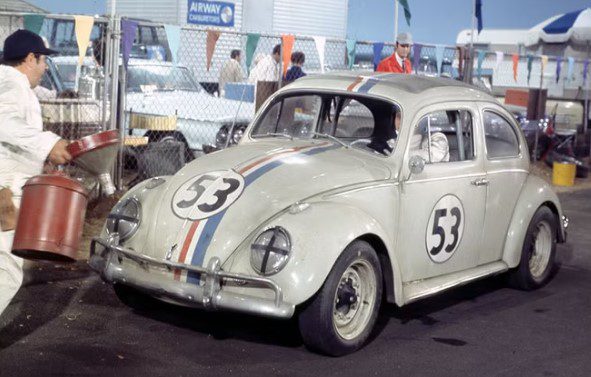
Herbie the Love Bug is a beloved character from the Disney franchise of the same name. The car, a 1963 Volkswagen Beetle Model 117 Deluxe Sunroof Sedan, wearing those iconic red, white, and blue racing stripes, and donning the number 53 racing number, is known for its mischievous and lovable personality.

The original Herbie film, “The Love Bug,” was based on the book “Car, Boy, Girl” by Gordon Buford, and was released in 1968 starring Dean Jones as race car driver Jim Douglas and Herbie as his trusty car. The film was a huge success and spawned several sequels, including “Herbie Rides Again” (1974), “Herbie Goes to Monte Carlo” (1977), “Herbie Goes Bananas” (1980), and “Herbie: Fully Loaded” (2005). The original film was the final live-action film authorized for production by Walt Disney himself, but since he died in 1966, he never saw the final cut.

One of the things that made Herbie so special was his ability to think and act on his own, often getting into mischief and hijinks. In the films, Herbie was often shown displaying human-like emotions and even had a “mind of his own,” often choosing to disobey his owner’s commands.

Herbie was also known for his love of racing. In the films, he was often seen participating in various car races and competitions, using his intelligence and quick thinking to outsmart his opponents. His signature racing moves included the “Herbie Shake,” in which he would shake his body to throw off pursuing cars, and the “Herbie Hop,” in which he would use his front wheels to jump over obstacles.

The car that played Herbie in the films was a modified 1963 Volkswagen Beetle. It was painted in Volkswagen L87 pearl white and had a white interior, but for the film they painted the Beetle gray so that it would not reflect studio lights. The car was equipped with a variety of special features, including a hidden control panel, a smoke generator, and a loudspeaker system. The car was also modified to be able to drive itself, allowing it to perform its own stunts in the films. An interesting note about the car is the word “Volkswagen” is never mentioned in the original film because VW did not give Disney the rights to use it. In fact, the car was stripped of all VW markings and was referred to as “the Douglas Special,” “the little car,” and “the compact car.”

The producer of The Love Bug, Bill Walsh, came up with the blue and red racing stripes, and gave the car No. 53 in honor of one of his favorite ballplayers, Don Drysdale of the LA Dodgers.

The original Herbie car was built by George Barris, a custom car builder who is best known for creating the Batmobile for the 1960s Batman TV series. Barris, more popularly know for his outlandish car builds, kept the modifications to this Beetle more subtle, including carrying the racing stripe over the canvas roof. Barris built three Herbie cars for the original film, and several more for the sequels. Both 1963 and 1966 model Beetles were used in the sequel, which you can spot by the varying size of the rear window.

The Herbie cars have become iconic symbols of the franchise and have been featured in various forms of merchandise, including toys, books, and clothing. The cars have also been featured in various theme parks, including Disney’s Hollywood Studios and Disneyland.

In recent years, there has been a resurgence of interest in Herbie and the Volkswagen Beetle. The car remains a popular choice among car enthusiasts and continues to be a beloved and nostalgic symbol of the 1960s and 1970s.

If you own a classic Volkswagen Beetle that’s in need of some love, you’ll want to check out our selection of Volkswagen Beetle restoration parts here.
Categories
Just For Fun

Mad Max 1973 Ford Falcon XB GT Coupe Interceptor

mad max ford falcon interceptor-banner

The Ford Falcon, featured in the iconic Mad Max film franchise, has become a cult classic among car enthusiasts and fans of the series.

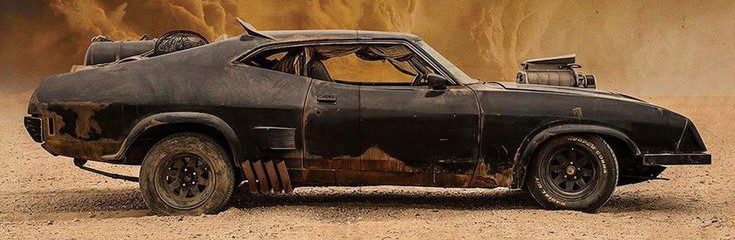
The original Mad Max, released in 1979, featured a 1973 Ford Falcon XB GT Coupe as the vehicle driven by the protagonist, Max Rockatansky, portrayed by Mel Gibson. The car, known as the “Interceptor” (aka V8 Interceptor, Last of the V8 Interceptors, or Pursuit Special), started out as a standard, white 351 cu in Australian-built Falcon, but was customized with a (non-working) Weiand 6-71 supercharger, nitrous oxide injection, roof and boot spoilers, wheel arch flares, front nose cone and air dam, exhaust side pipes, and various other modifications to make it a formidable force on the road.

The base-model Falcon was turned into a police interceptor for use by the Main Force Patrol (MFP). The MFP were the Australian Federal Police special task force in the movie, and their mission was to control the country’s ballooning crime rate. They would work hand-in-hand with the standard police to combat biker gangs and other savage criminals, hence the need for such a beefy vehicle.

In the sequel, The Road Warrior, a new Ford Falcon, a 1975 XB GT Hardtop, was used as the Interceptor. This version of the car was heavily modified with a new body kit, removal of the front air dam, a functional supercharger, a pair of large cylindrical fuel tanks mounted on the rear, and a matte black finish.

The third film in the franchise, Mad Max Beyond Thunderdome, featured yet another Ford Falcon, this time a 1977 XB GT Sedan. This version of the Interceptor was modified to include a turbocharged engine and a new paint job, making it one of the most memorable versions of the car in the series.

The Ford Falcon’s role in the Mad Max franchise cemented its place in pop culture history, and it remains a sought-after vehicle among car enthusiasts and fans of the series. The car’s rugged, no-nonsense design, combined with its high-performance capabilities, make it a perfect fit for the post-apocalyptic world of the films.

The Ford Falcon is not only a great car for the movies but also an iconic car for the Australian automotive industry. The Ford Falcon was produced in Australia from 1960 to 2016. It was a symbol of the country’s manufacturing industry, and it was a popular choice among car buyers in Australia.

If you have a Ford Falcon that looks like it was part of the Mad Max series, check out our Falcon restoration parts here.

Categories
Just For Fun

Sanford and Son 1951 Ford Pickup Truck

The Sanford and Son truck, also known as the “Funny Van,” is a beloved piece of television history. The show, which aired on NBC from 1972 to 1977, followed the antics of Fred Sanford (Redd Foxx) and his son Lamont (Demond Wilson) as they ran a junkyard and salvage business in Watts, Los Angeles. Each episode started with the famous “The Streetbeater” theme song written by Quincy Jones (if you grew up in this time, you know you can hear this song playing in your head right now), and the faded red and white 1951 Ford F-100 pickup pulling up to the house. The ’51 Ford was featured prominently in the show and played a key role in many of the episodes. The six-cylinder, three-speed truck was owned by Sanford and Son Salvage and was usually shown parked outside of the Sanford home.Sanford and Sun patch

The truck was used by Fred and Lamont to haul scrap metal and other items to and from the junkyard, and was also used for various “side hustles” that the two would undertake to make extra money. These included using the truck to haul away unwanted items for neighbors (think the OG 1-800-Got-Junk!), or to transport goods for local merchants. The truck was also used as a “company car,” with Fred and Lamont often using it to make sales calls or to visit suppliers.

The Ford F-100 pickup truck was a popular choice for small businesses in the 1970s, and the one used on the show was a perfect representation of the hardworking, American spirit that the show aimed to portray. The truck was reliable and rugged, and was able to handle the rough and dirty work that was required of it.

The Sanford and Son truck was also known for its unique paint and graphics. The most notable of these was the “Sanford and Son Salvage” logo featured prominently on the door of the truck. This logo became synonymous with the show and is still recognized by fans today.

In addition to its practical uses, the truck also played a comedic role in the show. Fred, who was known for his love of practical jokes, would often use the truck as the backdrop for his pranks. For example, in one episode, he convinced Lamont that the truck was haunted, and in another episode, he pretended that the truck was a “time machine” that could transport them back to the 1920s.

The Sanford and Son truck was not only a staple of the show, but also a beloved part of American pop culture. It represents the hardworking, entrepreneurial spirit of the 1970s and the tight-knit relationship between Fred and Lamont. Even today, the truck continues to be celebrated and remembered by fans of the show, who still appreciate its unique design and comedic role in the series. The original Sanford and Son truck is on display at BlueLine Classics.

If you own a 1948-1952 Ford pickup and are looking for parts to either restore or maintain it, take a look at our selection of 1948-1952 Ford Pickup Parts.

Categories
Product Information Tech Articles

What is Innerpanel Cavity Wax

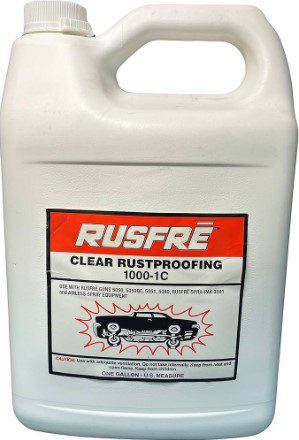
Innerpanel cavity wax is a type of wax that is specifically formulated for use in the inner cavities of automotive panels. It is a chemically formulinnerpanel cavity waxated wax-based rustproofing that creeps and penetrates into cracks and close-fitting areas. It creates a barrier between the metal and the environment, acting as a rust inhibitor, helping protect the metal from rust and corrosion. Innerpanel cavity wax typically comes in clear/amber and black colors.

Innerpanel cavity wax is typically applied using a brush or a spray gun. It also comes in a DIYer kit (see link below) that does not require any special equipment for application. The wax is applied in a thin and uniform layer, making sure to cover all the areas that need protection. Once applied, the wax should be allowed to dry completely before any additional coating or painting is applied. Typical coverage when spraying is approximately 100-150 sq ft per gallon at 4-6 mil wet coat.

The wax is usually applied after the panel is cleaned, when coming from the manufacturer, but it can be applied into a hard-to-reach area, without prior cleaning, when working with a used vehicle. The wax can be applied to bare metal and painted over, or it can be applied over top of paint. Innerpanel cavity wax is typically applied as a liquid, although some manufacturers also offer a spray-on version. Taping off electrical wires and connections is unnecessary when spraying innerpanel wax as it does not affect electrical systems or door and window mechanisms.

It’s important to note that the use of Innerpanel cavity wax is not a permanent solution and will need to be reapplied periodically to maintain its effectiveness. It’s also important to make sure that the wax is compatible with the paint or other coatings that will be applied on top of it.

Innerpanel cavity wax is commonly used on:
• Doors
• Tailgates
• Pillars
• Rocker Panels
• Front and Center Posts
• Rear Trunk and Panels
• Headlight Areas
• Underbody Structural and Frame Members
• Under the Hood
• Rear Quarters

Clear/Amber Innerpanel Cavity Wax Gallon
Black Innerpanel Cavity Wax Gallon
Innerpanel Cavity Wax Spray Gun
Cavity Wax Spray Wand
DIYer Cavity Wax Spray Kit

Categories
Tech Articles

What is self-etching primer, and how is it different from automotive primer?

Self-etching primer is a type of primer that is used to prepare metal surfaces for painting. It is specifically designed to create a strong bond between the metal surface and the paint by etching the surface of the metal to create a rough texture.

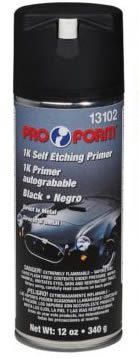
Self-Etch-Primer-blackSelf-etching primer contains acidic compounds, like phosphoric acid, that chemically “etch” the surface, creating a better adhesion between the metal and subsequent layers. It works by reacting chemically with the metal surface, creating a micro-etch pattern on the surface of the metal. This micro-etch pattern provides a mechanical key for the paint to adhere to, creating a strong bond between the metal and the paint.

Self-etching primer is ideal for unpainted, bare metal surfaces where extra adhesion is needed. It is typically used on new, bare metal surfaces, such as those found on cars, trucks, and other vehicles, but can also used on metal surfaces that have been previously painted, but where the paint has since been removed. It is generally applied in one thin layer. Self-etching primer should not be sanded, as sanding can remove the etched bond to the metal, reducing its effectiveness.

One of the advantages of self-etching primer is that it can be used on a wide variety of metal surfaces, including aluminum, steel, and galvanized metal. Additionally, it is easy to apply and dries quickly, making it a popular choice for automotive and industrial applications.

It’s important to note that self-etching primer is only to be used on metal surfaces, and not on other types of materials like plastic, wood or glass. It is also important to follow the manufacturer’s instructions for the application and use of self-etching primer, including safety precautions such as wearing gloves and a mask.

Self-etching primer differs from standard automotive primer, which acts as a general-purpose undercoat that provides a base for paint to adhere to, filling minor imperfections and providing a smooth surface for paint. General automotive primer can be made from a variety of components, including epoxy, urethane, or acrylic, depending on the specific type of primer, and is commonly used on previously painted surfaces, repaired panels, and sometimes bare metal. It helps with rust resistance and overall durability but may require a separate rust-preventive layer. Automotive primer is often sprayed on in multiple coats, followed by sanding between coats for a smooth finish.

Here are some highlights of the differences between Self-Etching Primer and general Automotive Primer:

1. Self-Etching Primer
– Purpose: Self-etching primer is specifically designed to bond with bare metal. It contains acidic compounds that chemically “etch” the surface, creating a better adhesion between the metal and subsequent layers.
– Formulation: Usually formulated with an acid, like phosphoric acid, and a resin that helps the primer bond to bare metal.
– Use Case: Ideal for unpainted, bare metal surfaces where extra adhesion is needed. It’s often used on new metal parts or areas where rust has been completely removed.
– Application: Generally applied in one thin layer. Self-etching primer should not be sanded, as sanding can remove the etched bond to the metal, reducing its effectiveness.

2. Automotive Primer
– Purpose: Automotive primers are general-purpose undercoats that provide a base for paint to adhere to, filling minor imperfections and providing a smooth surface for paint.
– Formulation: Made from a variety of components, including epoxy, urethane, or acrylic, depending on the specific type of primer.
– Use Case: Commonly used on previously painted surfaces, repaired panels, and sometimes bare metal. It helps with rust resistance and overall durability but may require a separate rust-preventive layer.
– Application: Automotive primers are often sprayed on in multiple coats, followed by sanding between coats for a smooth finish.

If you’re working with bare metal surfaces, self-etching primer is usually the better choice due to its strong bonding properties. For general use, including previously painted or repaired surfaces, a standard automotive primer is more versatile and offers a smoother, sandable finish for topcoat applications.

Self-etching Primer
Automotive Primer
Rust Inhibiting Primer